

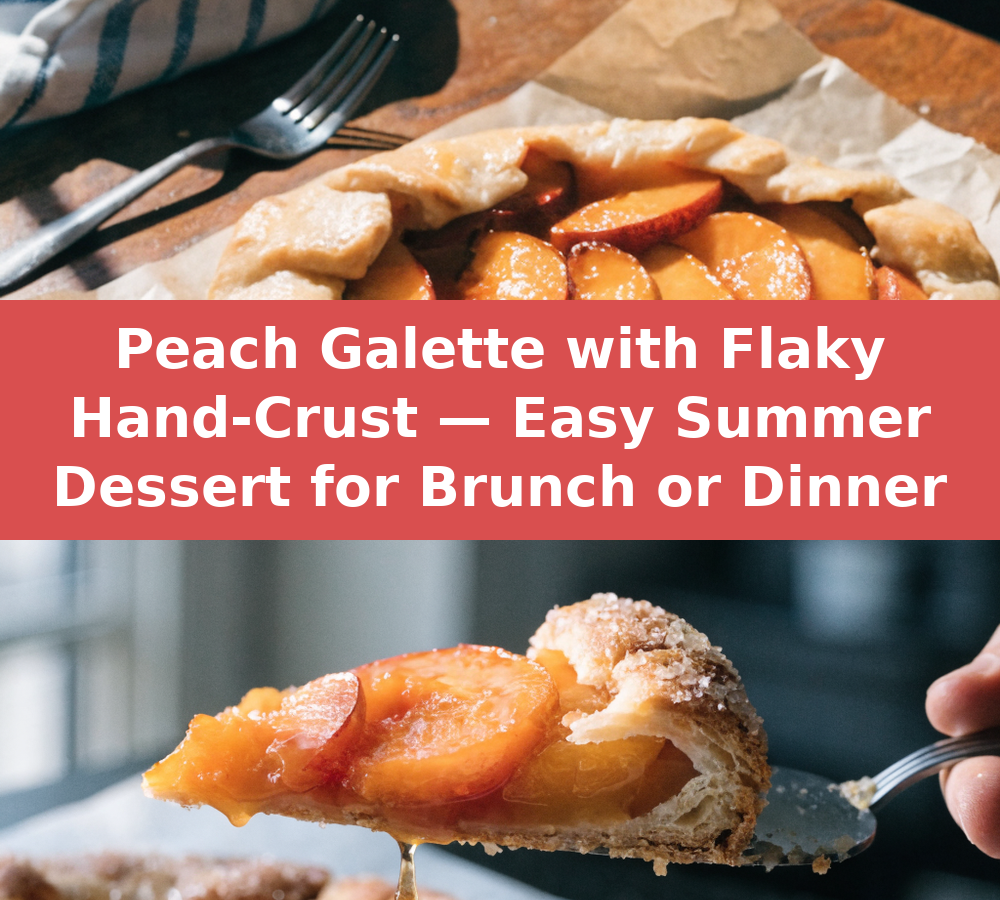
I remember the first time I tried a free-form tart and ended up with a soggy center—so for this peach galette I set out to get a crisp, buttery crust and peaches that tasted like late-summer sunshine. This peach galette uses a flaky, easy-to-roll all-butter pastry and a lightly thickened peach filling so the slices hold together, brown well, and look great on a plate.
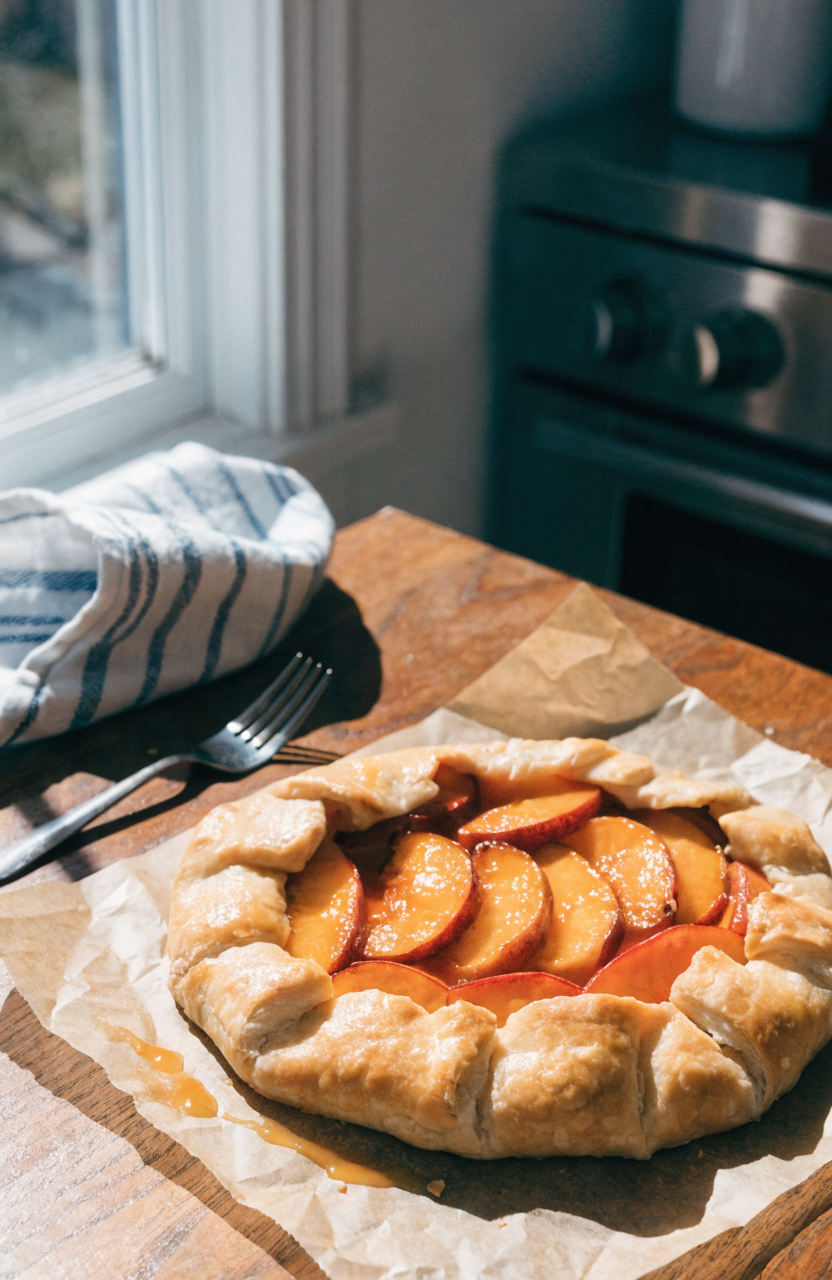
Why this peach galette works
The key technique is a cold, all-butter crust with minimal handling and a slightly reduced peach filling bound with a small amount of cornstarch and lemon juice. The crust uses grated frozen butter folded into cold water to create visible butter flakes, which produce a flakier texture than fully worked dough. For the filling I macerate sliced peaches very briefly with a touch of sugar and lemon, then gently heat them to concentrate juices and activate the cornstarch. That step prevents excess liquid from pooling on the bottom while preserving bright peach flavor.
What changed during testing was the balance between sugar and thickener: my first attempt used too much cornstarch and left the filling gummy; the final version uses just enough to set the juices without turning the peaches past tender. I also learned that docking the dough slightly and sprinkling a thin layer of almond flour or polenta under the fruit stops sogginess and adds a pleasant textural contrast.
Key takeaways
- Cold butter grated into the flour gives a reliably flaky crust.
- Briefly cooking the peaches with sugar and cornstarch concentrates juices and prevents a soggy bottom.
- A strip of egg wash and a sprinkle of coarse sugar make the crust deep golden and slightly crunchy.
Ingredients you’ll need and what to substitute
For the crust I use all-purpose flour, coarse salt, a little sugar, and all-butter for flavor and texture. If you want a slightly more tender crust, substitute up to half the flour with pastry flour. For people who prefer a neutral fat, replace the butter with a 1:1 mix of butter and a high-quality vegetable shortening—texture will be similar, but flavor is milder.
Peaches should be ripe but still slightly firm so they slice neatly. If peaches are underripe, add an extra teaspoon of sugar and a minute more cooking time; if they’re very juicy (late-season freestone varieties can be watery), use the full cornstarch amount and consider draining a couple of tablespoons of released juice before finishing the filling.
Almond flour or fine polenta under the fruit is optional but recommended to absorb excess moisture. Use light brown sugar for a touch of caramel flavor; granulated sugar works fine for a cleaner fruit taste. Fresh lemon juice brightens the filling; bottled lemon juice will work in a pinch but fresh is better.
Equipment
A few simple tools make this straightforward: a 9- or 10-inch rimmed baking sheet (the galette is free-form so a flat sheet is best), a box grater for freezing the butter into the flour, a pastry cutter or your fingers to combine, a rolling pin, and an oven thermometer if you want extra precision. A silicone baking mat or parchment paper is useful for rolling and transferring the galette. If you don’t have a box grater, chop very cold butter into pea-sized pieces and chill briefly before mixing.
How to make peach galette
Make the crust
Start with very cold ingredients: grate 8 tablespoons of frozen unsalted butter into 2 cups of all-purpose flour with 1 tablespoon sugar and 1/2 teaspoon salt, then toss with a fork so the butter is coated. Sprinkle 5 to 6 tablespoons of ice water over the mixture, tossing until the dough just comes together; it should hold when squeezed but still be shaggy. Form into a disk, wrap, and chill at least 20 minutes so the butter rehards and the gluten relaxes—this step helps keep the crust tender and easier to roll.
Prepare the filling
While the dough chills, slice 4 to 5 medium ripe peaches (about 2 pounds) into 1/4-inch wedges and combine them with 1/3 cup sugar, 1 tablespoon fresh lemon juice, 1 teaspoon vanilla extract, and 2 teaspoons cornstarch in a saucepan. Heat over medium-low just until the sugar dissolves and the juices begin to thicken, about 3 to 5 minutes—don’t boil. Cool slightly; this concentrates the fruit juices and activates the cornstarch so the filling sets without becoming pasty.
Assemble and bake
Preheat the oven to 400°F and position a rack in the center. On a lightly floured surface, roll the chilled dough into a 12-inch circle about 1/8-inch thick. Transfer to a parchment-lined baking sheet. Sprinkle the center (leaving a 2-inch border) with 2 tablespoons almond flour or fine polenta to absorb moisture, then arrange the peaches in overlapping circles, leaving the border clear. Fold the 2-inch dough edge up over the fruit in pleats, pressing gently to seal but leaving the center exposed.
Brush the crust with an egg wash made from 1 beaten large egg and 1 teaspoon water, then sprinkle 1 tablespoon coarse sugar (or turbinado) over the crust edge. Bake at 400°F for 35 to 45 minutes until the crust is deep golden and the filling bubbles gently. Rotate the pan after 20 minutes if your oven has hot spots. A thermometer placed in the crust edge should read about 205–210°F when finished for well-baked pastry.
Finish and serve
Let the galette cool on the sheet for at least 20 minutes so the filling firms up—this is the hardest part because it smells amazing. I usually brush the exposed peaches with a thin layer of warm apricot jam (strained) for a glossy finish but it’s optional. Serve warm or at room temperature with a scoop of vanilla ice cream or a dollop of whipped cream.
Things I learned the hard way
- Don’t skip chilling the dough: working with warm butter yields a dense crust. My first try used soft butter and the crust lost flakiness; chilling solved it.
- Cook the peaches briefly: raw fruit releases too much liquid. A quick simmer concentrates juices and reduces the risk of a soggy bottom.
- Use a dry layer under the fruit: almond flour or polenta prevents seepage into the crust.
- Don’t overuse cornstarch: too much makes the filling pasty. Start with the recommended 2 teaspoons and increase only if peaches are unusually watery.
- Roll larger than your intended size: the dough shrinks slightly; rolling to 12 inches for a 9–10 inch finished galette gives the right overlap for pleating.
Variations to try
- Honey-ginger peach galette: add 1 teaspoon grated fresh ginger to the filling and replace 2 tablespoons of sugar with honey; watch browning and reduce oven time by 3–5 minutes if the crust darkens too quickly.
- Rustic peach and blueberry: fold 1 cup fresh blueberries into the peach filling; increase cornstarch to 2 1/2 teaspoons if fruit is very juicy.
- Brown-butter crust: brown the butter, chill until solid, then grate or chop and use in place of cold butter for a nutty flavor; chilling time may need to increase to 30 minutes.
- Gluten-friendly option: substitute a 1:1 gluten-free all-purpose flour blend and add 1/4 teaspoon xanthan gum if your blend lacks it; texture will be slightly different but still tasty.
Storage, freezing, and reheating
Store leftover galette covered loosely at room temperature for up to 24 hours for the best crust texture, or refrigerate up to 3 days in an airtight container. To re-crisp the crust, reheat slices in a 350°F oven for 8–10 minutes. The galette can be frozen unbaked: assemble on a sheet, flash-freeze until firm, then wrap tightly and freeze up to 2 months; bake from frozen adding 5 to 10 minutes to the time and watch for color. Cooked galette freezes okay wrapped tightly for up to 1 month; thaw overnight in the refrigerator and reheat in the oven to revive the crust.
What to serve with peach galette
Peach galette pairs well with simple accompaniments that complement its warm fruit flavor: vanilla ice cream or whipped cream, a spoonful of Greek yogurt for a tangy contrast, a pot of strong coffee, or a light green salad for an afternoon gathering. For a brunch menu, serve it alongside a cheese plate with nutty cheeses and toasted almonds.
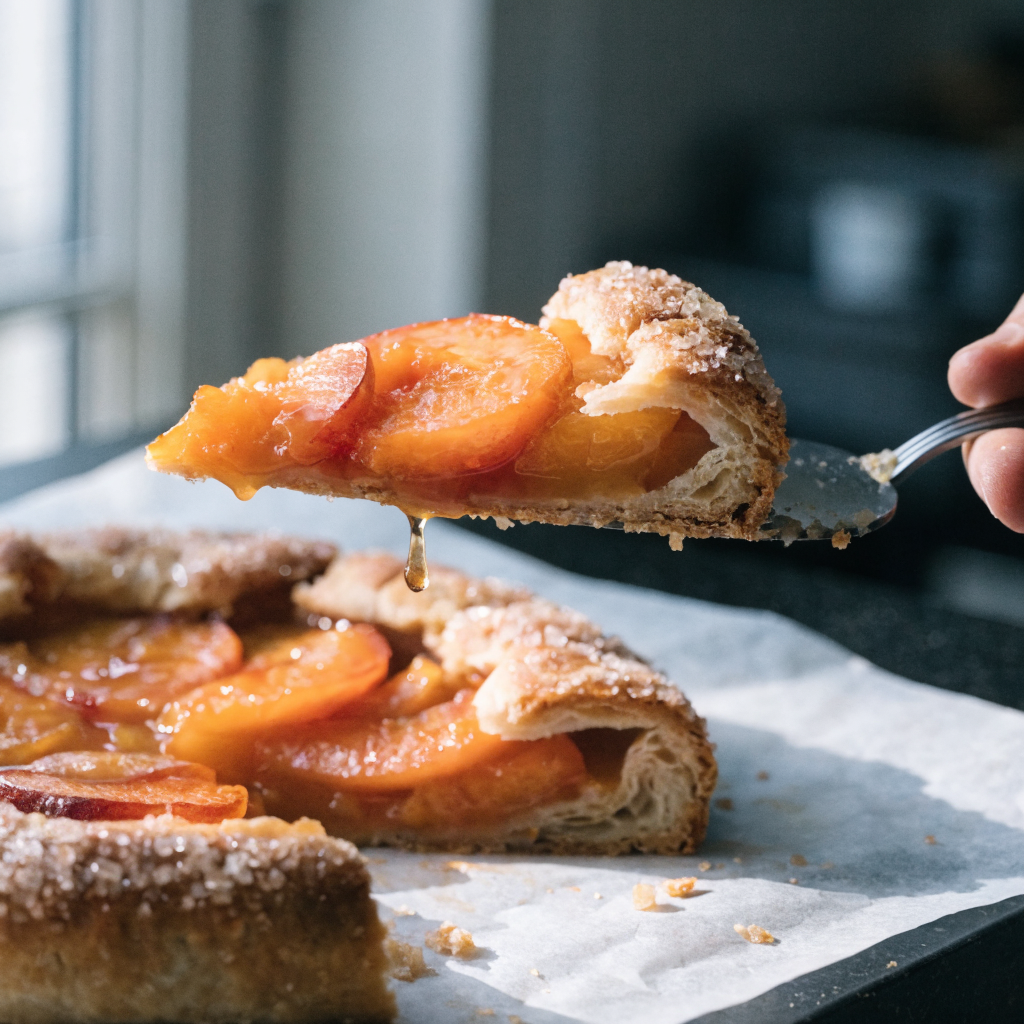

Easy Peach Galette with Flaky Hand-Crust
Ingredients
Equipment
Method
- Grate chilled butter on the large holes of a box grater and toss with flour, sugar, and salt until coated; sprinkle ice water a tablespoon at a time and mix until dough holds when squeezed, forming a shaggy dough.
- Form the dough into a 6-inch disk, wrap tightly, and chill at least 20 minutes (or up to 48 hours).
- Slice peaches and combine in a saucepan with sugar, lemon juice, vanilla, and cornstarch; warm over medium-low until sugar dissolves and juices thicken slightly, 3–5 minutes, then remove from heat and cool briefly.
- Preheat oven to 400°F and line a baking sheet with parchment. Roll the chilled dough to a 12-inch circle on a lightly floured surface and transfer to the parchment-lined sheet.
- Sprinkle almond flour or polenta in the center leaving a 2-inch border; arrange cooled peach slices in overlapping circles on top of the almond flour.
- Fold the 2-inch border up over the fruit in pleats, pressing gently to seal, and brush the dough edge with egg wash; sprinkle coarse sugar over the crust.
- Bake at 400°F for 35–45 minutes until the crust is deep golden and filling bubbles gently; rotate the pan once if needed for even browning.
- Let cool on the sheet for at least 20 minutes; brush exposed peaches with warmed apricot jam if desired before slicing and serving.
Notes
Frequently asked questions
Can I use canned peaches? Yes, but drain them well and reduce the cornstarch slightly because canned peaches are already soft; expect a softer texture and shorter bake time.
How do I stop the crust from getting soggy? Use slightly under-ripe peaches, briefly cook the filling to reduce juices, sprinkle a thin layer of almond flour or polenta under the fruit, and pre-chill the dough so it bakes quickly.
Can I make the dough ahead? Yes, make the dough and refrigerate wrapped for up to 48 hours or freeze for up to 1 month; thaw in the refrigerator before rolling.
Why did my filling become gummy? Too much cornstarch or overcooking will make the filling pasty; reduce cornstarch and stop heating once juices thicken slightly and peaches are just tender.
Can I double the recipe? Yes, make two dough discs and bake on separate sheet pans; avoid crowding the oven and rotate pans halfway through baking for even color.
Closing
This peach galette gives you a flaky, buttery crust and a juicy but set peach filling that slices cleanly—peach galette is a lovely way to showcase summer fruit and it’s forgiving enough to become a regular in my baking rotation. Serve it warm with ice cream or at room temperature for a relaxed dessert that highlights ripe peaches and straightforward technique.