
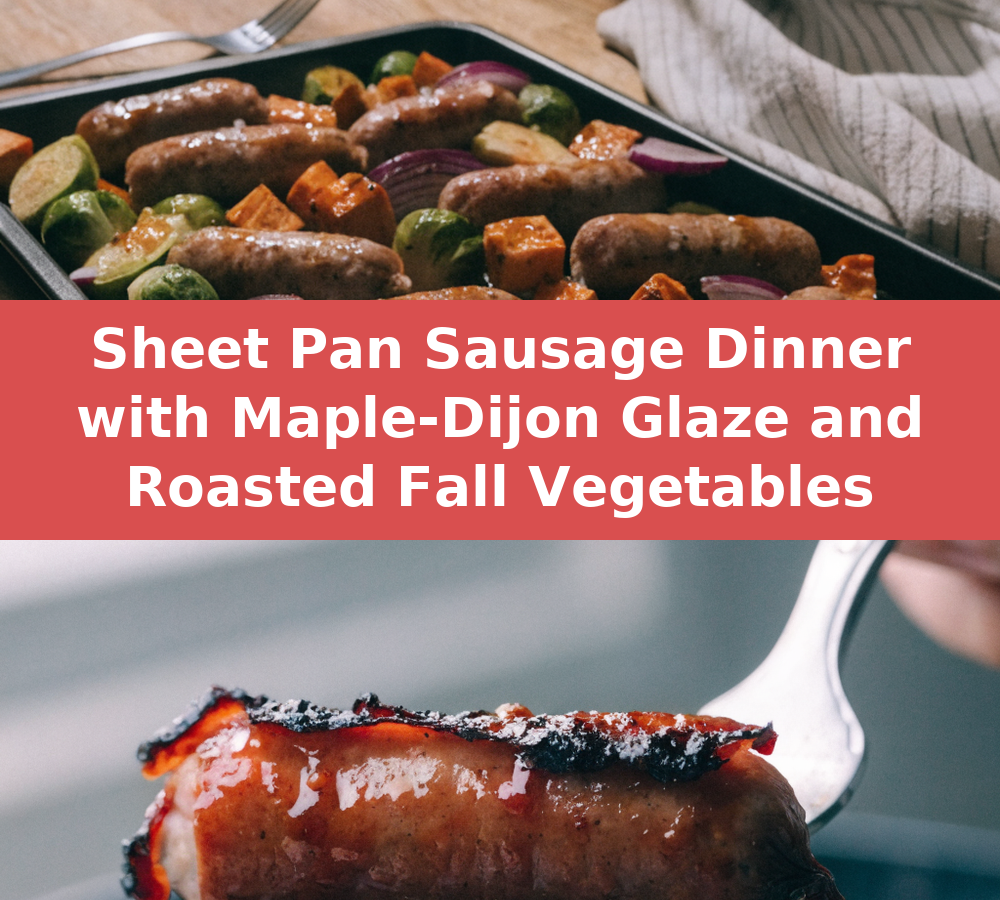
The first time I made this sheet pan sausage dinner I rushed the roast and ended up with floppy, under-browned Brussels sprouts and dry sausage ends—less than ideal for a weeknight. After one successful tweak—searing the sausage briefly and giving the biggest root pieces a head start—I landed on a dependable method that produces crisp edges, tender centers, and a sticky maple-Dijon coating that actually sticks. If you want a single-pan fall dinner that smells like cozy seasonings and tastes like comfort without a lot of babysitting, this sheet pan sausage dinner is one you can rely on.
Why this sheet pan sausage dinner works
The key technique here is timing and texture control: I roast the denser vegetables first, then add the sausage and quicker-cooking items so everything finishes at the same time. The glaze—maple syrup balanced with Dijon and a splash of vinegar—gives a glossy finish and just enough acidity to cut through the sausage richness. Using turkey sausage keeps the dish poultry-forward and avoids red meat, while a quick skillet sear before roasting jump-starts caramelization so the sausages brown instead of steam. During testing I discovered the biggest problem was steam trapped on the pan; switching from a crowded single sheet to a rimmed sheet with space between pieces solved that.
Key takeaways
- Start the densest vegetables (sweet potatoes) first so they have time to soften without over-roasting the more delicate items.
- Sear sausages briefly to lock in browning and prevent them from steaming on the sheet pan.
- Use a simple maple-Dijon glaze added near the end of roasting for glossy, sticky flavor without burning the sugar.
Ingredients you’ll need and what to substitute
This recipe leans on a balance of sweet, savory, and acidic elements: a mild turkey sausage for protein, sweet potato for starch and sweetness, Brussels sprouts and red onion for savory bite, and apple for brightness. If you can’t find turkey sausage, fully cooked chicken sausage works fine and will shorten sear time slightly; avoid raw red-meat sausages to follow the recipe constraints. Sweet potato can be swapped for butternut squash or Yukon gold potatoes—just adjust roast time: denser squash may need a few extra minutes. For a pantry swap, use brown mustard if Dijon is unavailable, and if maple syrup is not on hand, a light honey will do but reduce the finishing heat to prevent darkening.
Important notes: cut vegetables into even 1/2- to 3/4-inch pieces for even cooking, and pat sausage dry with a paper towel before searing to encourage browning.
Equipment
You don’t need fancy tools, but a few items make the process reliable. Use a large rimmed sheet pan (13×18-inch half sheet) so pieces have breathing room; a 12-inch skillet for searing; a sharp chef’s knife and cutting board; and an instant-read thermometer if you like an exact sausage doneness check. If you have two sheet pans, roast in stages rather than crowding a single pan.
How to make sheet pan sausage dinner
Prep and early roast
Preheat the oven to 425°F and line a rimmed sheet pan with parchment or a light coating of oil. Toss 1 inch–cubed sweet potatoes with 1 tablespoon olive oil, 1/2 teaspoon kosher salt, and 1/4 teaspoon black pepper, then spread them in a single layer on one side of the sheet pan. The sweet potatoes are the densest ingredient, so they go in first and get a 10-minute head start in the oven.
Sear sausage and prep remaining produce
While the sweet potatoes begin roasting, pat the turkey sausages dry and heat a 12-inch skillet over medium-high heat with 1 tablespoon oil. Sear the sausages 1 to 1 1/2 minutes per side—just enough to color the outsides—then transfer them to a cutting board. Searing adds color and gives the sausage edges that roasted flavor even if the interior will finish in the oven. Quarter 12 ounces Brussels sprouts, slice one medium red onion into wedges, peel and slice 2 medium carrots on the diagonal, and core and cut one firm apple into 3/4-inch pieces. Toss these with 1 tablespoon olive oil, 1/2 teaspoon salt, 1/4 teaspoon pepper, and 1/2 teaspoon dried thyme.
Combine and roast
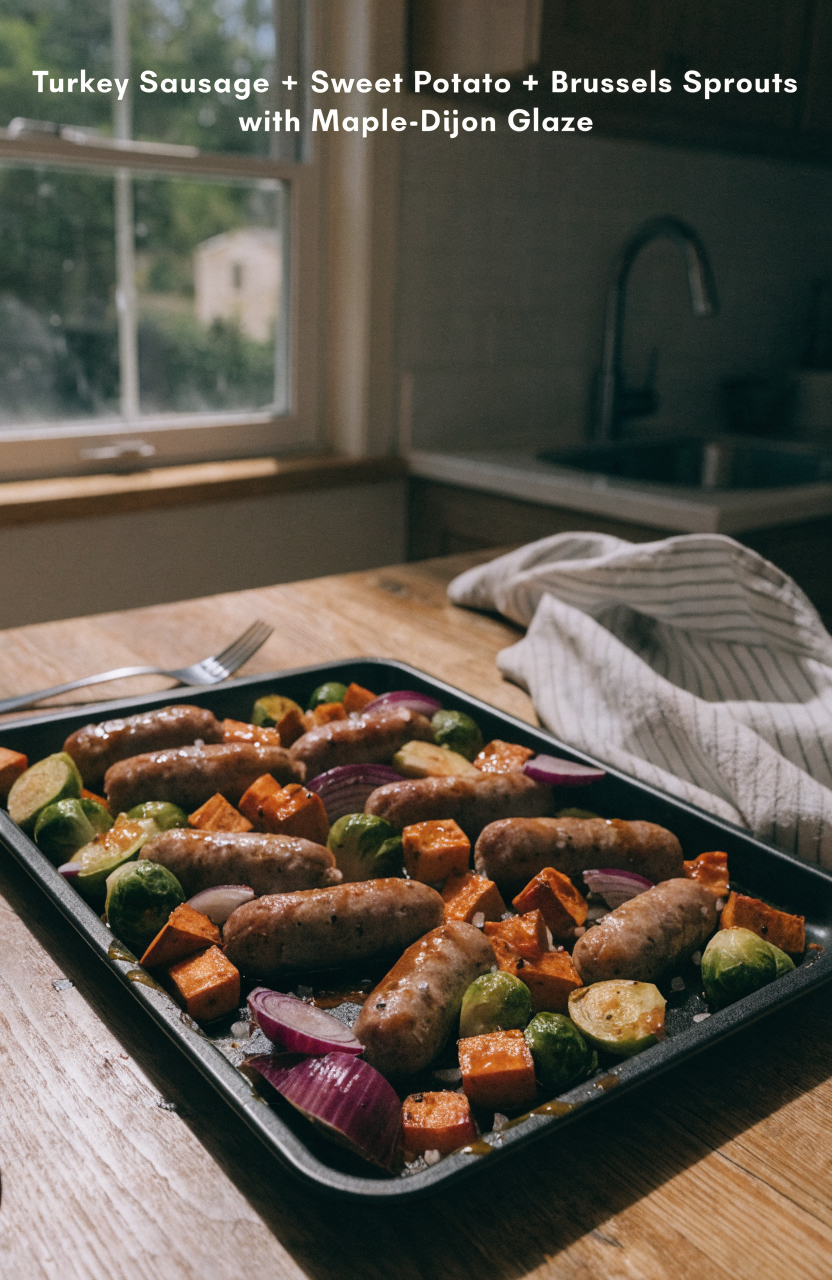
After the sweet potatoes have roasted 10 minutes, remove the pan and add the Brussels sprouts, carrots, onion, apple, and the seared sausages spaced evenly. Return the pan to the oven and roast for 15 to 18 minutes more, stirring the vegetables halfway through, until the vegetables are tender and the sausage reaches 165°F internal temperature. Look for crisp browning on the vegetable edges and sausages.
Glaze and finish
While the pan returns to the oven, whisk together the glaze: 2 tablespoons maple syrup, 1 tablespoon Dijon mustard, 1 teaspoon apple cider vinegar, and a pinch of red pepper flakes (optional). In the last 3 minutes of roasting, brush the glaze over the sausages and vegetables or drizzle it and quickly toss; return to the oven just until the glaze is glossy and set—no more than 3 minutes to prevent burning. Let the pan rest 5 minutes before serving so the glaze sets slightly.
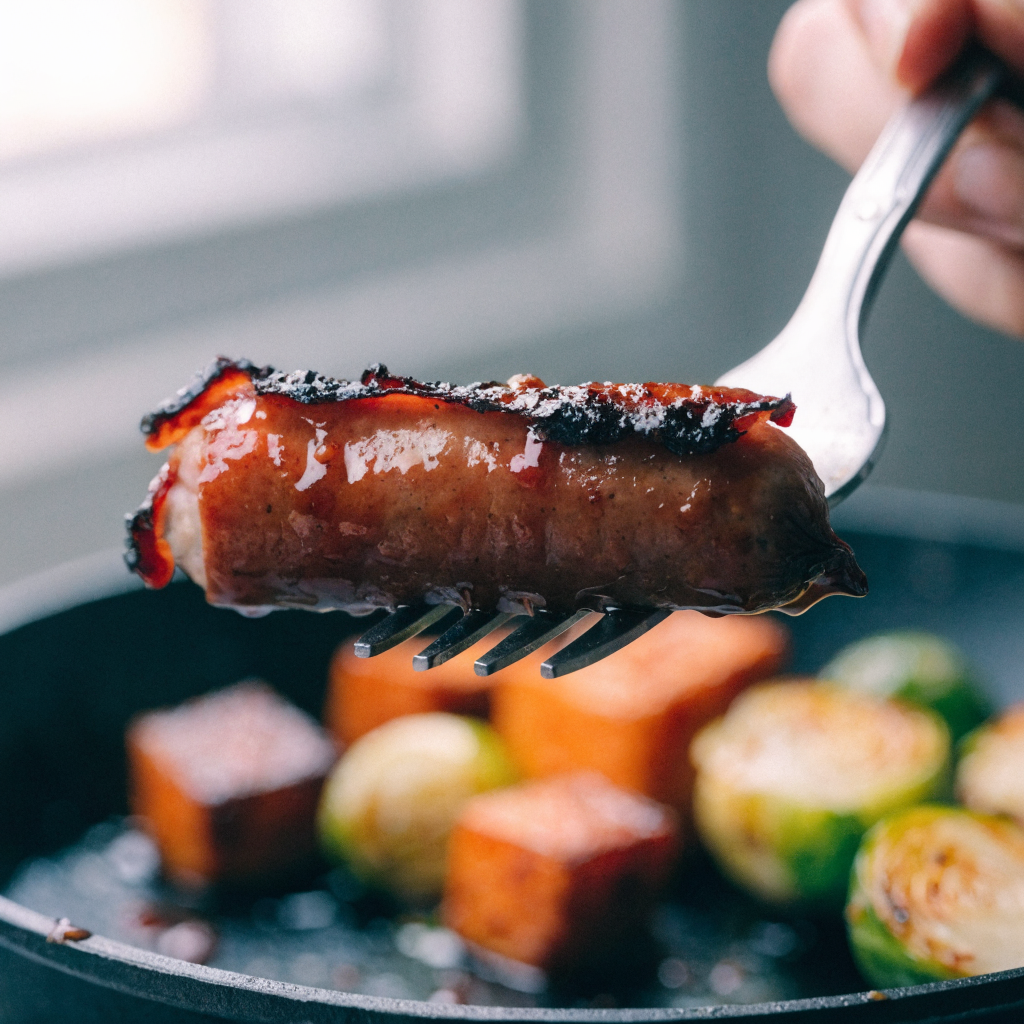
Sensory cues: sausages should have dark, caramelized edges and an internal temperature of 165°F; sweet potato pieces should be fork-tender with browned corners; apples should be softened but still hold shape.
Things I learned the hard way
1. Crowding steals crispness—give pieces space or use a second sheet pan. 2. Not drying the sausages first leads to steaming; pat them dry before searing. 3. Adding sugary glaze too early results in burnt sugar—glaze at the end. 4. Mixing very small pieces with large ones makes timing impossible—cut to uniform sizes. 5. Raw apple works better than a very soft apple because it holds shape and adds a fresh contrast; if your apple is overly ripe, add it at the very end. 6. My first attempt used all root vegetables and the overall dish felt heavy; adding apples and red onion brightened the plate and balanced the glaze.
Variations to try
- Maple-Chipotle: Swap in 1 teaspoon chipotle in adobo (minced) to the glaze for smokier heat; watch closely as the sugar will caramelize faster.
- Sausage and Pear: Use Bosc pear instead of apple and replace thyme with rosemary; pears brown faster so add them during the last 8 minutes.
- Vegetarian swap: Replace sausage with firm roasted tofu slices brushed with the same glaze; press the tofu first and sear gently before roasting.
- Herb-forward: Add 1 tablespoon chopped fresh sage and 2 teaspoons lemon zest after roasting for a fresher finish; no timing change needed.
Storage, freezing, and reheating
Refrigerate leftovers in an airtight container for up to 3 days. To reheat, spread on a rimmed sheet pan and rewarm in a 375°F oven for 10–12 minutes until heated through and edges crisp again; avoid microwaving which makes the veggies soggy. This dish does not freeze well once glazed because the texture of the roasted vegetables becomes mealy after freezing and reheating. If you want to freeze, remove sausages from the glaze and freeze vegetables and sausages separately in freezer bags for up to 2 months; thaw overnight and roast at 400°F for 15–20 minutes to revive crispness, then glaze at the end.
What to serve with sheet pan sausage dinner
This sheet pan meal stands well on its own, but if you want sides, consider a big green salad with a bright vinaigrette, warm crusty bread to mop up glaze, or simple cooked quinoa for extra bulk. For a winter table, serve alongside mashed cauliflower or a light lemon-parsley orzo.
Frequently asked questions
Can I use other types of sausage instead of turkey sausage? You can use other raw or fully cooked sausages; if switching to a different raw sausage type, follow the same searing and roast temperatures and ensure the sausage reaches a safe internal temperature appropriate for its meat. For fully cooked links, skip the searing and add them for the last 8–10 minutes to warm through and glaze.
How do I prevent soggy Brussels sprouts? Cut them evenly, roast on a single layer with space between pieces, and avoid covering the pan. High oven heat (425°F) encourages browning rather than steaming.
Can I make this gluten-free? Absolutely—most ingredients are naturally gluten-free; just confirm the sausage and Dijon mustard are labeled gluten-free.
Can I double the recipe? Yes, but use two sheet pans or roast in batches. Crowding a single pan will lengthen cook time and reduce browning.
What internal temperature should the sausages reach? Sausages should reach 165°F for turkey or chicken sausage; use an instant-read thermometer to be sure.
Why did my glaze burn? Sugary glazes burn quickly at high heat—apply glaze only in the last 2–3 minutes of roasting and watch closely.
Closing
This sheet pan sausage dinner delivers crisp edges, tender-roasted vegetables, and a sticky maple-Dijon finish that feels seasonal without fuss. The whole meal comes together while you clear the table, and the aroma of roasting sweet potato and sausage makes it an easy weeknight favorite. Let leftovers rest in the fridge and reheat on a sheet pan to revive crisp edges for another quick dinner.