

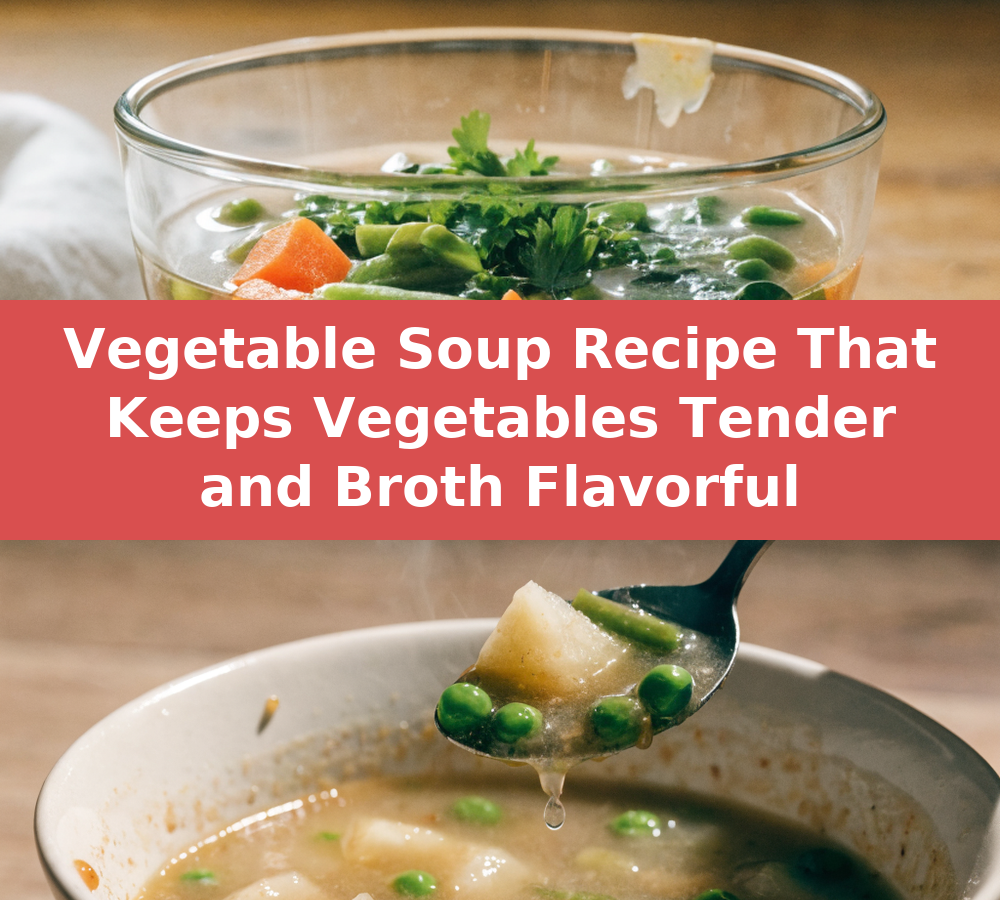
I remember the afternoon I needed a bowl of real comfort: a bright, savory vegetable soup that tasted homemade, not watered down. That’s how my vegetable soup recipe started—by fixing the two problems I kept seeing in other versions: dull broth and overcooked vegetables. This version uses a short sauté to build flavor, staged simmering so each vegetable keeps its texture, and a late herb finish for freshness.
Why this vegetable soup recipe works
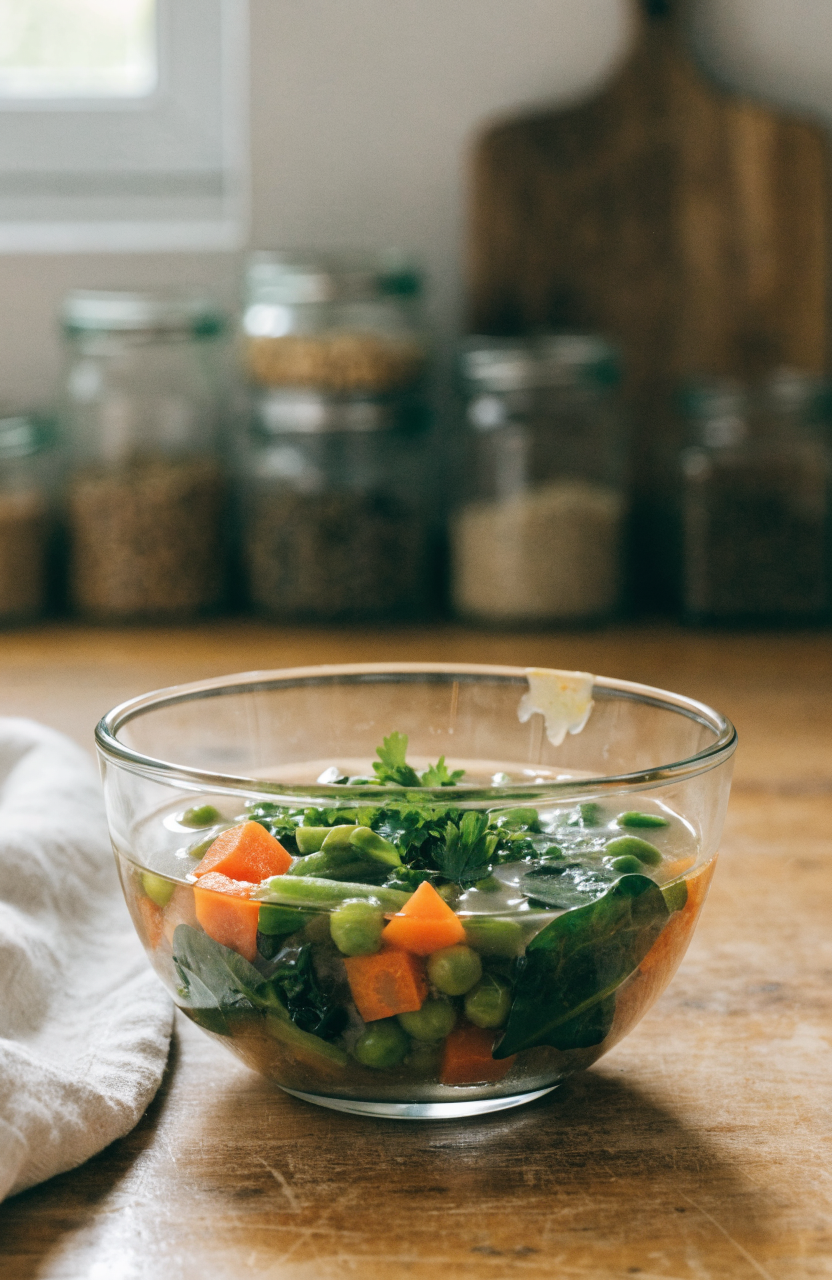
The part that matters is how the soup builds flavor in layers. I start by sautéing onions, carrots, and celery to coax out sweetness, then add garlic and tomato for depth, before deglazing with a splash of water and adding stock. Staged cooking keeps delicate veg like peas and spinach from overcooking while sturdier vegetables soften properly. During testing I hit two main issues: a flat-tasting broth and vegetables that turned mushy. What fixed both was briefly roasting some root vegetables for caramelization in one trial, but the final, simpler fix I stuck with was a longer, low-simmer finish (20–25 minutes) and adding softer vegetables in the last 5–7 minutes. The result is a broth with body and vegetables that still have bite—exactly what I wanted for an everyday, dependable dinner.
Key takeaways
- Sauté aromatics first to build a flavorful base.
- Stagger vegetable additions so everything finishes at the right doneness.
- Add fresh herbs at the end for brightness and adjust salt after simmering.
Ingredients you’ll need and what to substitute
This vegetable soup recipe leans on simple grocery staples: yellow onion, carrots, celery, garlic, canned tomatoes, mixed vegetables, and a good vegetable or chicken stock. Use low-sodium stock so you can salt to taste. I often swap half the mixed vegetables for seasonal produce—diced butternut in fall, zucchini in summer. If you don’t have fresh herbs, 1 teaspoon dried thyme and 1 teaspoon dried oregano works, but add dried herbs earlier in the simmer so they hydrate. Canned diced tomatoes add acidity and body; if you prefer, use 1/2 cup tomato sauce for a smoother broth. For a heartier soup, stir in 1/2 cup cooked barley or small pasta at the end and simmer 8–10 minutes longer. If you need a dairy-like richness, finish a single serving with a teaspoon of butter stirred in off the heat.
Equipment
Use a heavy-bottomed 4- to 6-quart pot or Dutch oven so the soup simmers evenly; a 12-inch skillet is handy if you want to roast or caramelize vegetables first; a ladle and a wooden spoon finish the set. A fine-mesh strainer or immersion blender is optional if you prefer a slightly puréed texture.
How to make vegetable soup recipe
Prep and build the base
Start by chopping one medium yellow onion, two medium carrots, and two celery stalks into roughly 1/4- to 1/2-inch pieces so they cook evenly. Mince two garlic cloves. Heat 2 tablespoons of olive oil in a 6-quart Dutch oven over medium heat until the oil shimmers. Add the onion, carrot, and celery with a pinch of salt and sauté, stirring occasionally, until the onions are translucent and the carrots begin to soften—about 6–8 minutes. Add the garlic and cook 30–45 seconds until fragrant but not browned.
Add tomatoes, stock, and hardy vegetables
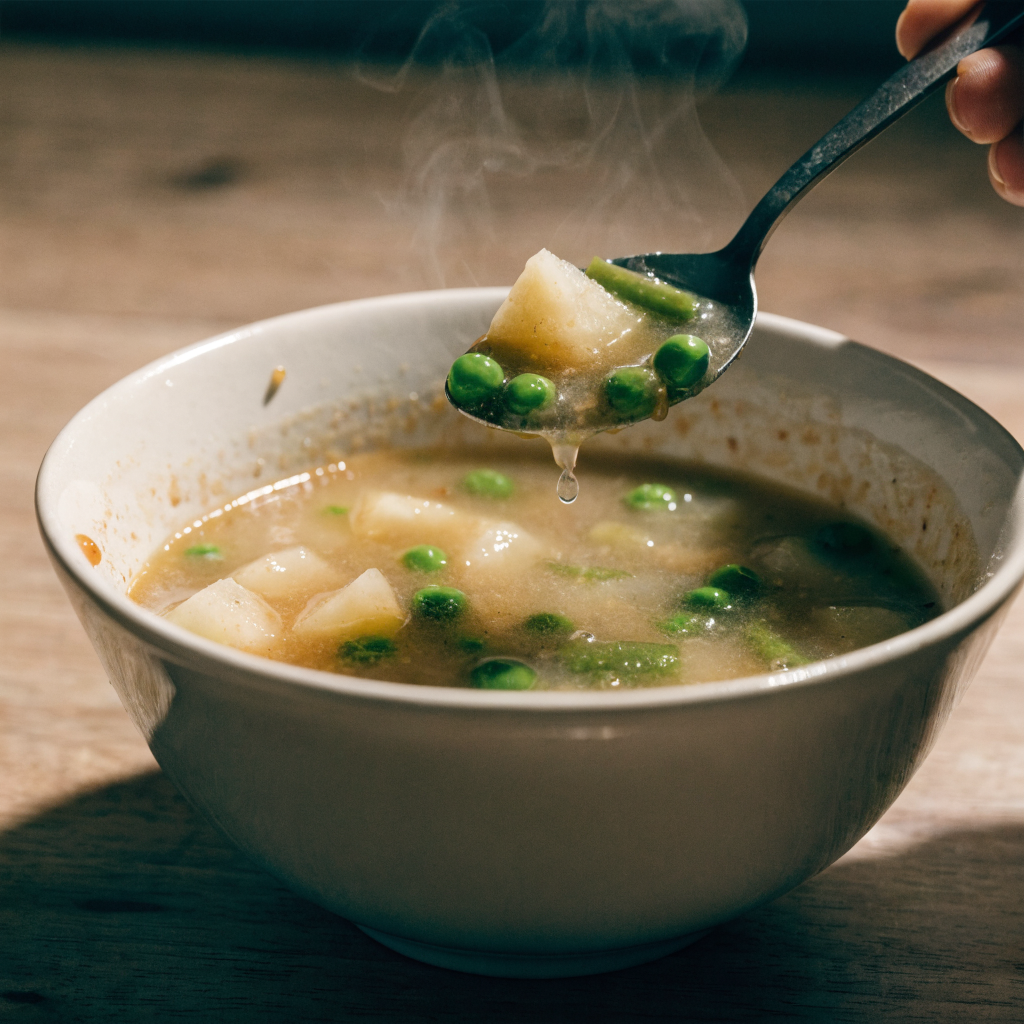
Stir in one 14.5-ounce can diced tomatoes (with juices) and 1 tablespoon tomato paste if you want extra body. Let the mixture bubble for 1–2 minutes, scraping any browned bits off the bottom. Pour in 6 cups of low-sodium vegetable stock (or chicken stock) and bring to a gentle boil. Add 2 medium potatoes—peeled if you prefer—or a 1 1/2 cups of diced butternut squash for sweetness; these starchy vegetables give the broth slight thickness as they break down. Reduce heat to a low simmer and cook, uncovered, for 18–22 minutes until the potatoes or squash are just tender.
Finish with tender vegetables and herbs
Five to seven minutes before the end of cooking, add 1 1/2 cups frozen or fresh green beans (cut into 1-inch pieces), 1 cup frozen peas, and 2 cups chopped spinach or kale (stems removed). Stir in 1 teaspoon dried thyme (if using dried) or wait until the end for fresh thyme. Season with 1 1/2 teaspoons kosher salt and 1/2 teaspoon freshly ground black pepper, then taste and adjust after the final simmer. Turn off the heat and stir in 2 tablespoons chopped fresh parsley and 1 tablespoon lemon juice for brightness. Let the soup rest five minutes before serving so flavors meld.
Important doneness cues: potatoes should pierce easily with a fork but not be falling apart; greens should wilt but remain bright; peas should be tender but not mushy. If you add pasta or barley, factor in an extra 8–12 minutes of simmering for pasta or 20–30 minutes for barley, and reduce stock by 1 cup for barley if you prefer a thicker consistency.
Things I learned the hard way
- Don’t dump every vegetable in at once—staggering keeps texture and prevents a muddy-tasting broth.
- Using low-sodium stock prevents oversalting; you can always add more salt after simmering.
- Adding leafy greens too early ruins their color and texture; add them in the last 5 minutes.
- First attempt mistake: I once blanched and added frozen mixed veg straight into the pot at the start, which produced a watery, bland soup. Fix: cook frozen veg briefly in a separate pan to evaporate excess ice glaze or add them only at the end.
- A small splash of lemon juice or a tablespoon of vinegar at the end lifts the broth more effectively than adding extra salt.
Variations to try
- Mediterranean-style: Swap the thyme for 1 teaspoon dried oregano, add a 1/2 cup chopped roasted red pepper, and finish with a tablespoon of chopped basil. No timing change required.
- Hearty minestrone: Add 1/2 cup small pasta and 1 cup canned drained cannellini beans with the starchy vegetables; simmer until pasta is al dente (8–10 minutes). Reduce stock by 1/2 cup for thicker broth.
- Curried vegetable soup: Stir 1 tablespoon mild curry powder with the garlic, and add a 1/2 cup coconut milk at the end; add tender vegetables as directed but taste for salt after coconut milk is added.
- Pureed creamy style: Remove 2 cups of cooked vegetables after simmering and purée them with an immersion blender, then stir back into the pot for a lightly creamy texture without cream.
Storage, freezing, and reheating
Refrigerate in airtight containers for up to 4 days. For freezing, cool completely and transfer to freezer-safe containers or heavy-duty freezer bags, leaving 1 inch headspace; freeze for up to 3 months. To reheat from refrigerated, simmer gently on the stovetop until hot—about 8–10 minutes—stirring occasionally. From frozen, thaw overnight in the refrigerator, then reheat. If the soup thickens after refrigeration or freezing, add 1/2 to 1 cup stock or water while reheating and bring back to a gentle simmer to restore mouthfeel.
What to serve with vegetable soup recipe
Serve this soup with crusty bread, grilled cheese sandwiches, or a simple mixed-green salad. For a complete weeknight meal, plate with buttered whole-grain toast and a small portion of roasted chicken or chickpea salad on the side. The bright herb finish pairs especially well with a lemony grain salad or a warm baguette.
Frequently asked questions
Can I use frozen mixed vegetables? Yes—add frozen vegetables in the last 5–7 minutes of cooking or briefly thaw and drain them first to avoid diluting the broth. Cooking frozen veg from the start often leads to a thinner, less flavorful soup.
How long will leftover soup last in the fridge? Properly stored in airtight containers, the soup stays good for up to 4 days; always reheat until steaming hot.
Can I make this vegetarian or vegan? Yes—use vegetable stock and skip any butter garnish or replace it with olive oil. The recipe as written is easily plant-based with no other changes.
Can I add pasta or grains? Yes; add small pasta for the last 8–10 minutes or quick-cooking grains. If using barley, simmer an extra 20–30 minutes and consider reducing initial stock by 1 cup to keep the soup from becoming too thin.
Why did my soup taste flat? Flat broth usually means insufficient sauté time for aromatics or under-seasoning. Sauté the onion-carrot-celery until softened and add a finishing acid like lemon juice to brighten the flavor after simmering.
Is it better to use fresh or canned tomatoes? Canned diced tomatoes are convenient and add consistent acidity and body; if using fresh, add them earlier and simmer a bit longer to release their juices.
Closing
I’ve made this vegetable soup recipe dozens of times; it smells like a home kitchen—sweet onions, a faint tomato tang, and fresh herbs—and keeps its texture from first bite to last. Keep a jar of stock and a bag of mixed vegetables on hand and you’ll have a reliable, creative weeknight dinner that’s easy to tweak depending on the season.