
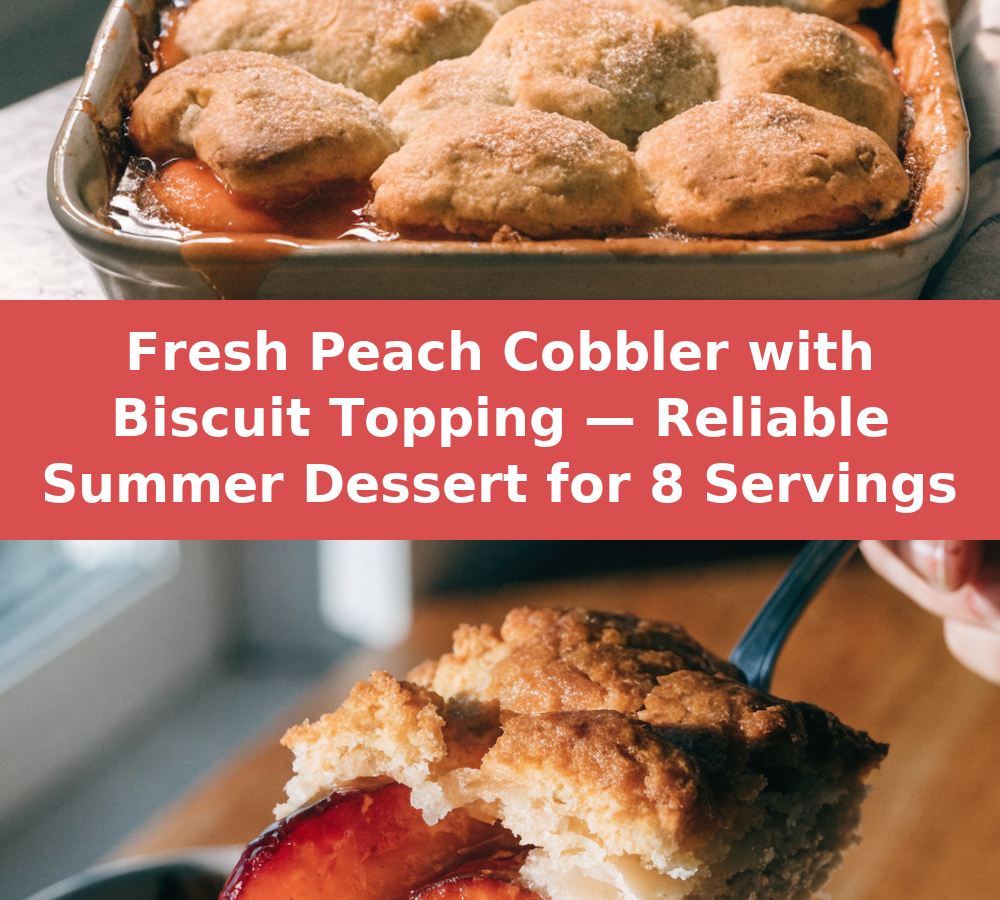
On the first week my neighbor brought over a basket of ripe peaches, I knew I wanted a fresh peach cobbler that tasted like summer without a fussy technique. This fresh peach cobbler uses a lightly thickened filling and a biscuit-style topping that browns evenly while the fruit bubbles, and the focus keyword appears right up front because that’s exactly what I set out to perfect.
I tested a few versions and learned a couple of things the hard way—read on for the exact cues and timing I trust now.
Why this fresh peach cobbler works
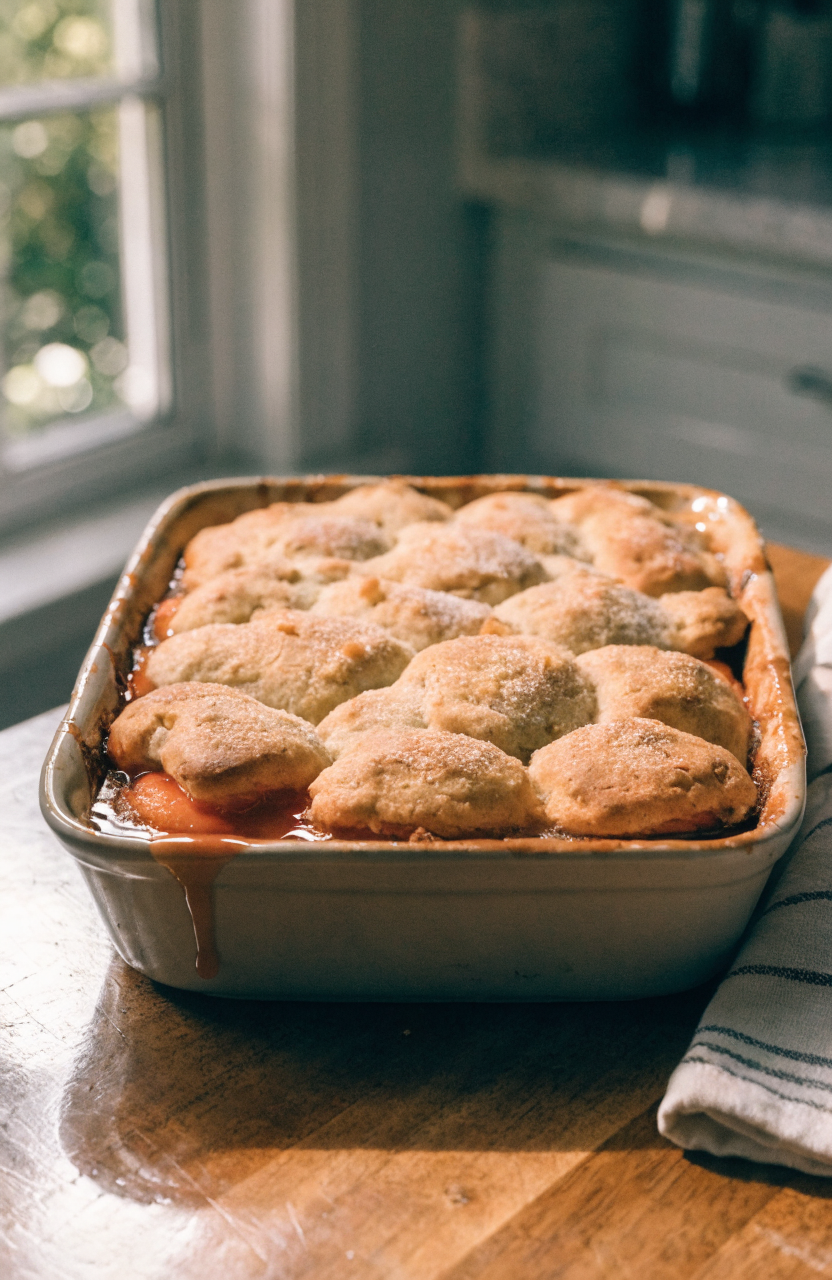
The key technique behind this fresh peach cobbler is managing moisture: ripe peaches release a lot of juice, which can make the topping soggy or the center syrupy. I solved that by tossing the sliced peaches with lemon, sugar, and a moderate amount of cornstarch, then letting them macerate briefly so the cornstarch can start binding released juices. For the topping, I use a biscuit-style dough with part-sifted flour and just enough butter to produce tender layers that still hold up to bubbling fruit. During testing I initially used a drop-biscuit method and found the center stayed underdone; switching to slightly thicker biscuit rounds and spacing them apart allowed steam to escape and the topping to bake through without overbrowning the edges.
What changed during testing was the order and the pan: baking the filling briefly before adding the topping dried the surface a touch and reduced sogginess. The final result is a warm, slightly jammy peach filling with a golden, tender biscuit top that offers a pleasant contrast in textures—exactly the reliable home dessert I wanted to deliver for everyday entertaining.
Key takeaways
- Toss peaches with cornstarch and sugar to prevent a watery cobbler.
- Use a biscuit-style topping and space pieces so the center bakes fully.
- Bake the filling a few minutes before adding topping to reduce sogginess.
Ingredients you’ll need and what to substitute
For the filling you want ripe but still-firm peaches so they keep some shape as they soften. Granulated sugar and a touch of brown sugar add sweetness and depth; lemon juice brightens the fruit while cornstarch thickens the juices without making the filling gummy. If you prefer, arrowroot can replace cornstarch at a 1:1 ratio—expect a slightly clearer sauce. I recommend using unsalted butter so you control the salt level; if you only have salted butter, omit added salt in the topping.
For the topping I use all-purpose flour, a little baking powder for lift, and whole milk (or buttermilk for extra tang). Buttermilk makes the biscuits tangier and slightly more tender; if you don’t have buttermilk, make a quick substitute by adding 1 tablespoon lemon juice to 1 cup milk and letting it sit 5 minutes. Light brown sugar in the topping gives a subtle caramel note, but you can use all granulated sugar if needed—expect a slightly less complex flavor. If fresh peaches are scarce, peeled and drained frozen peaches may work, but drain well and reduce any added liquid.
Equipment
You don’t need fancy tools—just a few kitchen basics that affect outcomes. Use a 9×13-inch baking dish so the fruit layer is an even thickness and the topping spaces nicely; a 2-quart baking dish will work for a smaller batch. A sturdy mixing bowl, a pastry cutter or two forks to cut butter into the flour, and a silicone spatula or wooden spoon are helpful. I often use a cooling rack to let the cobbler rest before serving.
How to make fresh peach cobbler
Prep the peaches
Start by peeling and slicing about 2 1/2 pounds of peaches into roughly 1/2-inch wedges. Toss the slices with 3/4 cup granulated sugar, 1 tablespoon fresh lemon juice, 2 tablespoons cornstarch, and 1/2 teaspoon ground cinnamon in a large bowl. Let the mixture sit 15 minutes while you preheat the oven; this short maceration softens the fruit and lets the cornstarch begin absorbing liquid. You’ll see some juices pool—this is expected and part of how the filling becomes saucy but controlled.
Par-bake the filling
Preheat your oven to 375°F and lightly butter a 9×13-inch baking dish. Spoon the peach mixture into the dish and spread into an even layer. Bake the filling uncovered for 12 minutes; the edges should start to bubble and the surface will look a touch glossy. This par-bake firms the surface so the topping doesn’t sink into excessively wet fruit.
Make the biscuit topping
While the filling par-bakes, combine 2 cups all-purpose flour, 1/4 cup granulated sugar, 2 tablespoons light brown sugar, 1 tablespoon baking powder, and 1/2 teaspoon salt in a bowl. Cut in 10 tablespoons cold unsalted butter until the mixture resembles coarse crumbs with some pea-sized bits—use a pastry cutter or two forks. Stir in 3/4 cup milk or buttermilk until a shaggy dough forms; don’t overmix. Turn the dough out onto a lightly floured surface and fold it over itself 2–3 times to create layers, then pat to about 3/4-inch thickness and cut into twelve 2-inch rounds or drop 12 spoonfuls for drop biscuits.
Assemble and bake
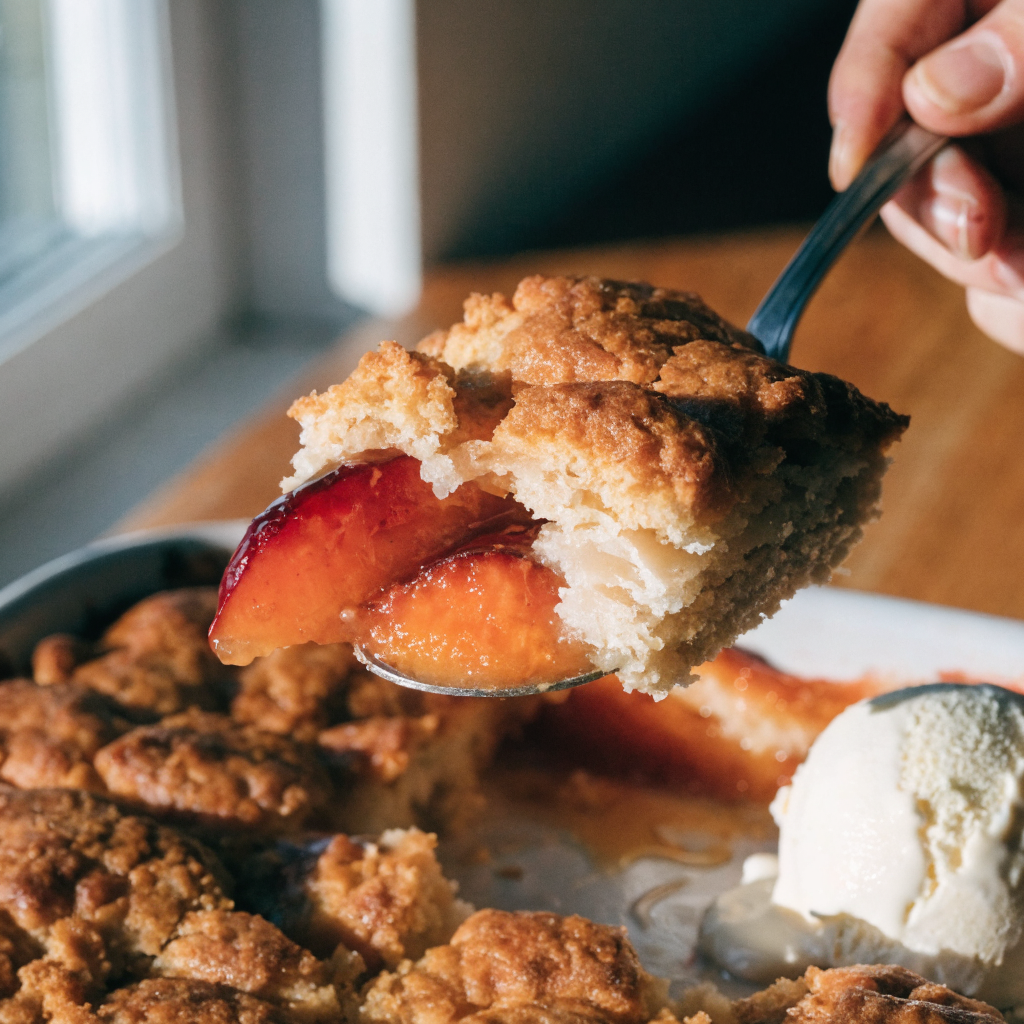
Remove the filling from the oven and arrange the biscuit rounds evenly across the peaches, leaving small gaps so steam can escape. Brush the biscuit tops with 1 tablespoon milk and sprinkle lightly with 1 tablespoon raw sugar if you like a little sparkle. Bake at 375°F for 28–32 minutes, until the biscuits are golden and a toothpick inserted in a biscuit comes out clean and the peach juices are bubbling around the edges. Let the cobbler rest 15 minutes before serving; this resting time helps the filling set so portions hold together better.
Serve warm with a scoop of vanilla ice cream or a dollop of whipped cream if you like. The contrast between the warm, slightly thickened peaches and the tender, layered biscuits is what makes this dish feel both homestyle and dependable.
Things I learned the hard way
- If the peaches are overly soft, reduce maceration time and drain excess liquid; too-soft fruit makes the filling thin.
- Using too much cornstarch makes the sauce gluey—stick to 2 tablespoons for this amount of fruit.
- Placing biscuits too close causes an underbaked center; leave small gaps so heat circulates.
- Skipping the short par-bake produced a soggy top in my first trial; the 12-minute par-bake fixed that without drying the fruit.
- Overworking the biscuit dough makes it tough—mix until just combined and fold gently.
- If you double the recipe, use a larger pan (11×15-inch) and add 6–8 minutes to both baking stages.
Variations to try
- Peach-berry cobbler: Add 1 cup fresh raspberries or blueberries to the peaches—reduce sugar by 2 tablespoons and add 1 tablespoon extra cornstarch to balance berry moisture.
- Brown-butter topping: Brown the butter, let it cool slightly, and use it in place of cold butter for a nuttier biscuit—expect slightly darker color and richer flavor, no timing change needed.
- Oat-crust topping: Replace 1/2 cup flour with 1/2 cup rolled oats and add 1/4 teaspoon ground nutmeg for a heartier texture; bake the same time but watch for faster browning.
- Buttermilk biscuits: Use full buttermilk in the topping for a tangier crumb; the baking time stays the same but the biscuits may brown a touch faster.
Storage, freezing, and reheating
Store leftover cobbler covered in the refrigerator for up to 3 days in an airtight container or covered tightly with foil. The biscuit topping will soften over time—reheat single portions in a 350°F oven for 12–15 minutes to crisp the top again; microwaving works for speed but makes the topping soft. You can freeze assembled, unbaked cobbler for up to 2 months: cover tightly with plastic wrap and foil, then bake from frozen, adding 12–18 minutes to the total bake time and checking that the biscuits reach a golden color. Thaw overnight in the refrigerator before reheating if you prefer a shorter oven time.
What to serve with fresh peach cobbler
Pair this cobbler with simple, complementary sides: a scoop of vanilla ice cream or lightly whipped cream, a pot of strong coffee for brunch, or a cold glass of milk for casual family dessert. For an adults-only gathering, serve alongside a small plate of sharp cheddar slices—the sweet-savory contrast is a classic pairing.

Classic Fresh Peach Cobbler with Biscuit Topping
Ingredients
Equipment
Method
- Peel and slice peaches into 1/2-inch wedges, then toss with 3/4 cup granulated sugar, 1 tablespoon lemon juice, 2 tablespoons cornstarch, and 1/2 teaspoon cinnamon; let sit 15 minutes.
- Preheat oven to 375°F and butter a 9×13-inch baking dish, spread the peach mixture in an even layer, and bake uncovered for 12 minutes until juices begin to bubble at the edges.
- Combine 2 cups flour, 1/4 cup granulated sugar, 2 tablespoons light brown sugar, 1 tablespoon baking powder, and 1/2 teaspoon salt; cut in 10 tablespoons cold butter until mixture resembles coarse crumbs, then stir in 3/4 cup milk until just combined, pat to 3/4-inch thick and cut into twelve 2-inch rounds or scoop 12 spoonfuls.
- Remove the filling from the oven, arrange biscuit rounds over the peaches leaving small gaps, brush tops with 1 tablespoon milk and sprinkle 1 tablespoon raw sugar if using, then bake at 375°F for 28–32 minutes until biscuits are golden and filling bubbles; let rest 15 minutes before serving.
Notes
Frequently asked questions
Can I use frozen peaches? Yes, but thaw and drain them thoroughly and pat dry; reduce any extra liquid and add 1 extra tablespoon of cornstarch because frozen fruit often releases more juice.
Why is my cobbler watery? Most likely the peaches released too much juice; next time toss with the cornstarch and let them macerate, or par-bake the filling slightly longer to evaporate excess moisture.
How do I keep the topping from burning before the filling bubbles? Bake at the stated 375°F and par-bake the filling first; if the top browns too fast, tent loosely with foil for the last 8–10 minutes of baking.
Can I make the topping ahead? Yes—prepare the biscuit dough, shape it, and refrigerate wrapped for up to 24 hours; add a few extra minutes of bake time if baking cold dough straight from the fridge.
How ripe should peaches be? Peaches should be ripe but still firm to the touch; overly soft peaches break down excessively and can make the filling thin.
Closing
This fresh peach cobbler balances a jammy, bright peach filling with a tender biscuit top that bakes through reliably—it’s the version I reach for when peaches are in season and I want a dessert that’s both simple and consistent.