
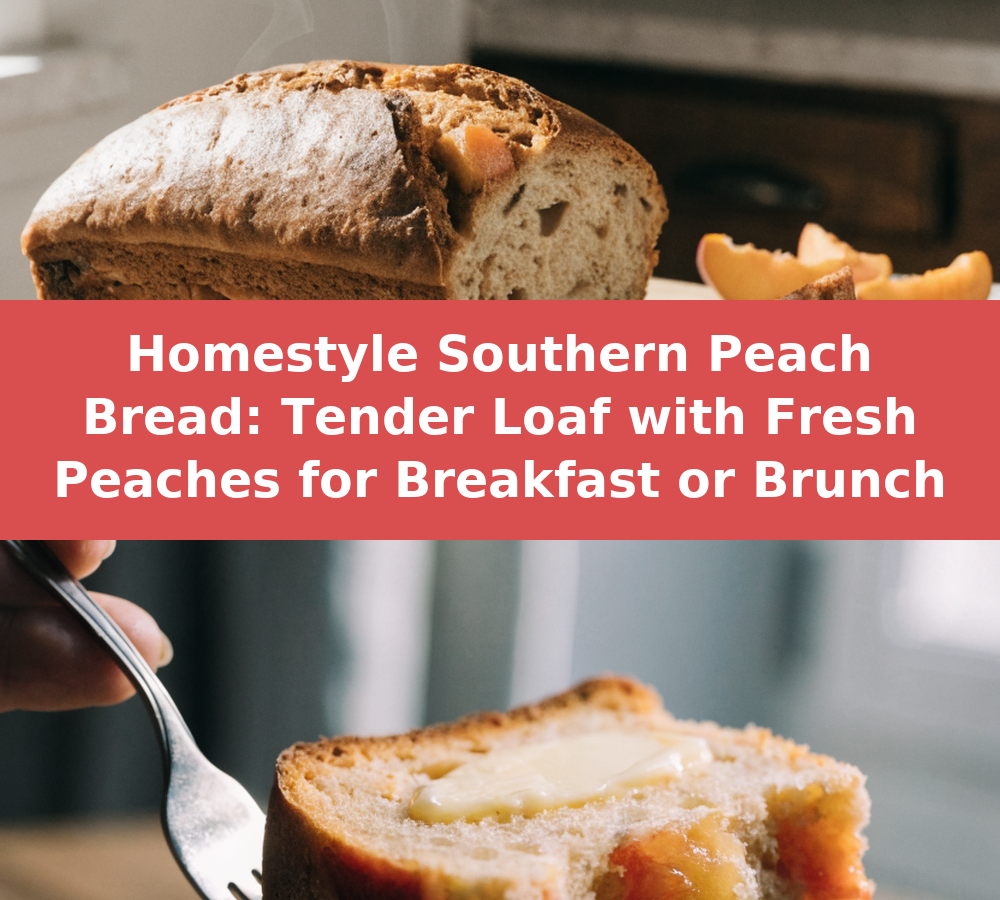
On a humid morning when the peach stand at the farmers market was calling my name, I decided to turn that bounty into a loaf everyone could slice for breakfast or an afternoon snack. This southern peach bread uses fresh peaches and a quick maceration step so the fruit stays juicy without watering down the batter—exactly the trick I needed when my first attempt produced a dense, soggy center.
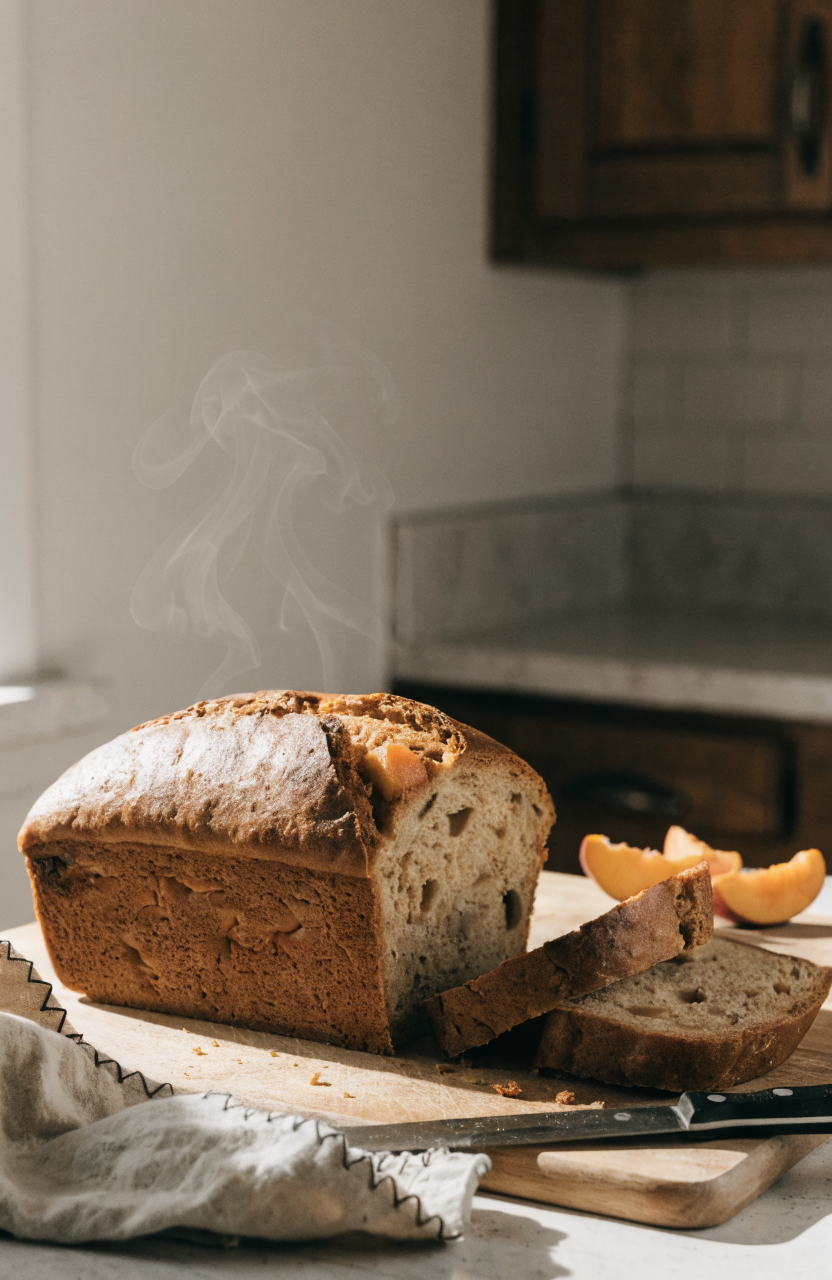
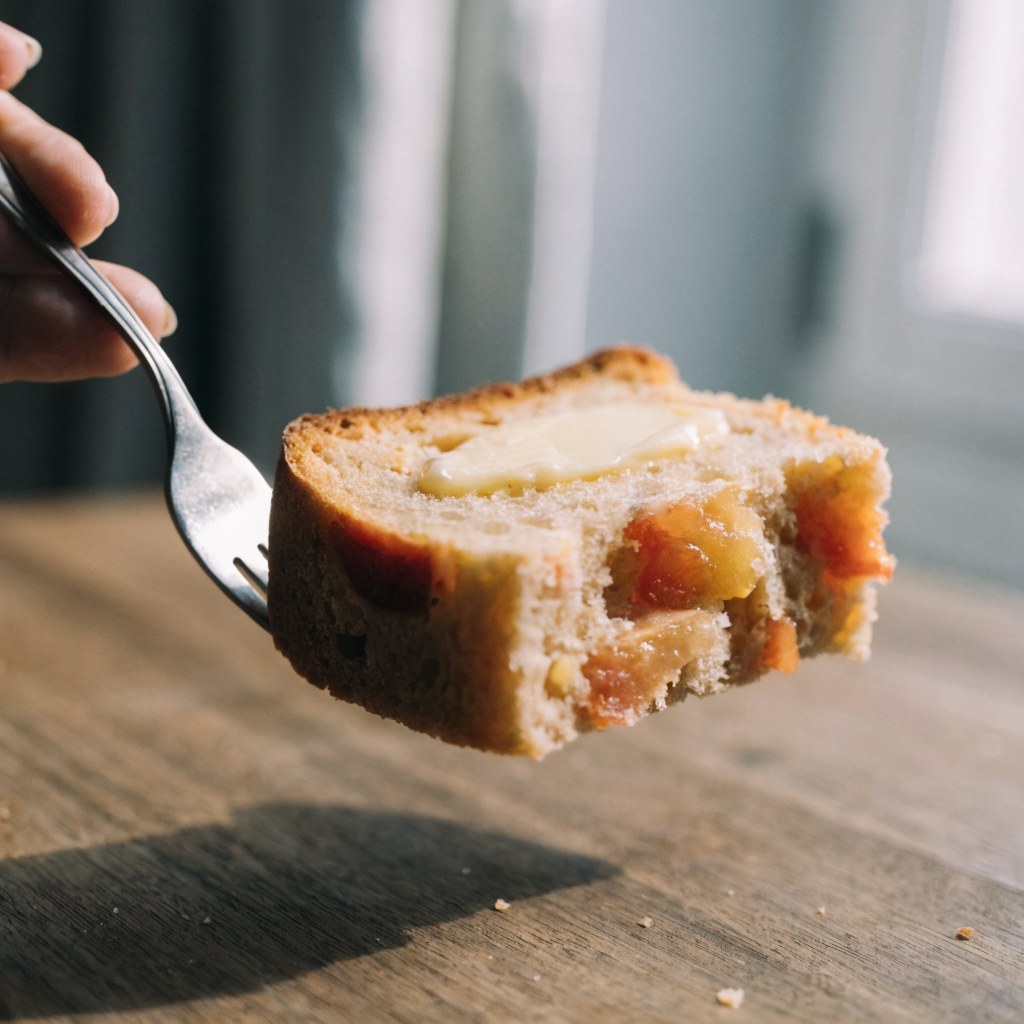
With a reliable texture and clear baking cues, this southern peach bread is one of those creative everyday recipes I reach for all summer long; it smells like warm cinnamon and ripe peaches as it finishes baking and slices cleanly into tender, slightly crumbly pieces that hold their fruit chunks in place.
Why this southern peach bread works
The technique that makes this loaf reliable is separating the fresh peaches from their juices briefly: I macerate the diced peaches with a small amount of sugar and cornstarch, then drain most of the liquid before folding the fruit into the batter. That small cornstarch step thickens the peach juices so they don’t dilute the batter while the maceration draws out flavor and softens the fruit just enough. I also tested swapping some of the all-purpose flour for a small portion of cake flour—it made the crumb softer but also more fragile—so the final version uses only all-purpose flour with an extra splash of sour cream for tenderness and structure.
During testing I learned that too-large peach chunks sink, so I chop them to roughly 1/2-inch pieces, and I avoid overmixing the batter to keep the crumb from becoming tough. Finally, a medium loaf pan (8 1/2 x 4 1/2 inches) gives the right height and bake time; larger pans produce a flatter loaf that bakes faster on the edges and stays raw in the center.
Key takeaways
- Short maceration with cornstarch prevents a soggy loaf while intensifying peach flavor.
- Use 1/2-inch peach pieces and fold gently to keep fruit suspended and crumb tender.
- 8 1/2 x 4 1/2-inch pan and 60 minutes at 350°F deliver a golden crust and set center.
Ingredients you’ll need and what to substitute
This recipe uses fresh summer peaches, basic baking staples, and a touch of sour cream for moisture. You can substitute Greek yogurt (full-fat) for the sour cream measure-for-measure, but expect a slightly tangier loaf and a firmer crumb. If your peaches are very sweet, reduce the granulated sugar by 1/4 cup; if the peaches are underripe and firm, a brief 10-minute maceration helps them soften.
Key substitutions and notes:
- Sour cream: substitute full-fat Greek yogurt 1:1; low-fat yogurt will thin the batter slightly and may reduce richness.
- All-purpose flour: for a lighter crumb you can replace up to 1/2 cup with cake flour, but don’t remove more or the loaf may collapse.
- Brown sugar: light or dark brown sugar both work; dark adds a deeper molasses note.
- Peaches: use freestone peaches when possible; clingstone varieties work but require a bit more effort to pit.
- Vanilla: pure vanilla extract gives the best flavor; vanilla paste is also an excellent swap.
Equipment
Here’s what I used and what I recommend for dependable results.
- 8 1/2 x 4 1/2-inch loaf pan (standard medium loaf)
- Mixing bowls (one large for batter, one medium for macerating peaches)
- Hand mixer or stand mixer with paddle attachment
- Rubber spatula and a wire cooling rack
- Instant-read thermometer (optional but helpful)
How to make southern peach bread
Prep the peaches
Start by peeling (optional), pitting, and dicing fresh peaches into roughly 1/2-inch pieces. Place the diced peaches in a medium bowl with 1 tablespoon granulated sugar and 1 teaspoon cornstarch; toss to coat and let sit for 10 minutes. After macerating, pour the peaches into a fine-mesh sieve set over a bowl and allow most of the liquid to drain for 5 minutes, stirring gently so the cornstarch absorbs the juices. Reserve the drained peaches and discard or reserve the thickened juice for a spoonful over yogurt.
Make the batter
Preheat the oven to 350°F and grease the loaf pan, or line it with parchment with a 1-inch overhang for easy removal. In a large bowl, whisk together 2 cups all-purpose flour, 1 1/2 teaspoons baking powder, 1/2 teaspoon baking soda, 1/2 teaspoon fine salt, and 1 teaspoon ground cinnamon. In the bowl of a stand mixer or a large bowl with a hand mixer, cream 1/2 cup (1 stick) unsalted butter (softened) with 2/3 cup granulated sugar and 1/3 cup packed light brown sugar until light and slightly fluffy, about 2–3 minutes. Add 2 large eggs, one at a time, beating briefly after each addition, then beat in 1/2 cup sour cream and 2 teaspoons vanilla extract until combined.
Combine and fold
With the mixer on low, add the dry ingredients in three additions, alternating with 2–3 tablespoons of milk (start with 2 tablespoons; add the third only if the batter looks too thick). Stop mixing as soon as the flour is incorporated—do not overmix. Gently fold in the drained diced peaches with a rubber spatula, keeping the motion light so the fruit stays distributed and the batter remains airy. If you like a streusel, mix 1/3 cup brown sugar, 2 tablespoons cold butter, and 1/3 cup flour with a fork until crumbly and sprinkle on top before baking.
Bake and test for doneness
Transfer the batter to the prepared loaf pan and smooth the top. Bake at 350°F for 55–65 minutes; start checking at 50 minutes. The loaf is done when the edges pull slightly from the pan, the top is golden, and an instant-read thermometer inserted into the center reads 205–210°F for a sturdy quick-bread texture. If you don’t have a thermometer, insert a thin skewer into the center; it should come out with a few moist crumbs but no raw batter. If the top browns too quickly, tent loosely with foil for the last 10–15 minutes.
Cool and serve
Let the loaf cool in the pan for 10 minutes, then lift it out using the parchment overhang and finish cooling on a wire rack for at least another 30 minutes before slicing. The bread slices best when allowed to cool enough to set; cutting warm can compress the crumb and cause the slices to crumble.
Things I learned the hard way
- If you chop peaches too large they sink; 1/2-inch pieces stay suspended in the batter better.
- Skipping the cornstarch step can make the center soggy—thickening the fruit juices prevents a diluted batter.
- Overmixing the batter produces a tough, rubbery crumb. Mix until just combined.
- Baking in a pan that’s too large flattens the loaf and leads to uneven baking; stick to an 8 1/2 x 4 1/2-inch pan for this quantity.
- My first attempt used low-fat yogurt instead of sour cream and the loaf lacked richness; full-fat dairy gives the best texture.
Variations to try
- Peach-Blueberry: Fold 1/2 cup fresh blueberries with the peaches; reduce peaches to 1 cup and watch for faster browning.
- Spiced Maple: Replace 1/4 cup granulated sugar with 1/4 cup maple syrup and add 1/4 teaspoon ground nutmeg; reduce added milk by 1 tablespoon.
- Nutty Crunch: Fold in 1/2 cup chopped pecans and sprinkle 2 tablespoons on top; toast nuts briefly before adding for extra aroma.
Storage, freezing, and reheating
Store cooled slices wrapped tightly or in an airtight container in the refrigerator for up to 5 days. For longer storage, wrap the whole loaf in plastic wrap and a layer of foil and freeze for up to 3 months; thaw overnight in the refrigerator then bring to room temperature before serving. To refresh a slice, warm in a 325°F oven for 8–10 minutes or microwave a single slice for 12–20 seconds—watch closely to avoid drying.
What to serve with southern peach bread
This loaf pairs well with simple additions: plain yogurt or ricotta with a drizzle of honey, a smear of softened butter, or a cup of black coffee or iced tea. For a brunch spread, serve alongside scrambled eggs, a green salad, or lightly dressed arugula for balance.

Homestyle Southern Peach Bread
Ingredients
Equipment
Method
- Peel (optional), pit, and dice peaches into roughly 1/2-inch pieces; toss peaches with 1 tablespoon granulated sugar and 1 teaspoon cornstarch and let sit 10 minutes, then drain in a fine-mesh sieve for 5 minutes, reserving the thickened juices if desired.
- Preheat oven to 350°F and grease or line an 8 1/2 x 4 1/2-inch loaf pan; whisk together 2 cups flour, 1 1/2 teaspoons baking powder, 1/2 teaspoon baking soda, 1 teaspoon cinnamon, and 1/2 teaspoon salt.
- Cream 1/2 cup softened butter with 2/3 cup granulated sugar and 1/3 cup brown sugar until light, about 2–3 minutes; add 2 eggs one at a time, then beat in 1/2 cup sour cream and 2 teaspoons vanilla until combined.
- On low speed, add dry ingredients in three additions alternating with 2–3 tablespoons milk (use the third tablespoon only if batter seems too thick); stop mixing when just combined and gently fold in drained peaches with a rubber spatula.
- If using streusel, sprinkle over the top. Transfer batter to the prepared pan and smooth the top; bake at 350°F for 55–65 minutes until a skewer comes out with moist crumbs or an instant-read thermometer reads 205–210°F. Tent with foil if top browns too fast.
- Cool the loaf in the pan 10 minutes, then lift out and cool on a wire rack at least 30 minutes before slicing; store cooled bread wrapped in the refrigerator up to 5 days.
Notes
Frequently asked questions
Can I use canned or frozen peaches? Yes, but drain frozen peaches thoroughly and pat dry; canned peaches should be well drained and patted dry—both may need slightly less sugar because canned fruit is often sweeter.
Will the bread be too moist with fresh peaches? Not if you macerate briefly and drain the juices; the cornstarch thickens the released liquid so it doesn’t dilute the batter.
Can I halve the recipe? Yes—you’ll need a smaller pan (loaf pan about 5 x 3 inches) and the bake time will drop to about 35–45 minutes; check doneness early.
How do I prevent the top from cracking? A shallow crack is normal. For a neater top, smooth batter and avoid overfilling the pan; covering loosely with foil in the last 10 minutes can reduce excessive browning.
Is sour cream necessary? It adds moisture and tenderness; full-fat Greek yogurt is a fine substitute but expect a slightly denser crumb.
Closing
This southern peach bread hits the right notes for summer breakfasts and snack-time slices — it slices cleanly, smells sweet and spicy, and keeps for days when wrapped and chilled. I still reach for this peach loaf whenever peaches pile up at the market, and I hope it becomes a dependable go-to in your kitchen too.