

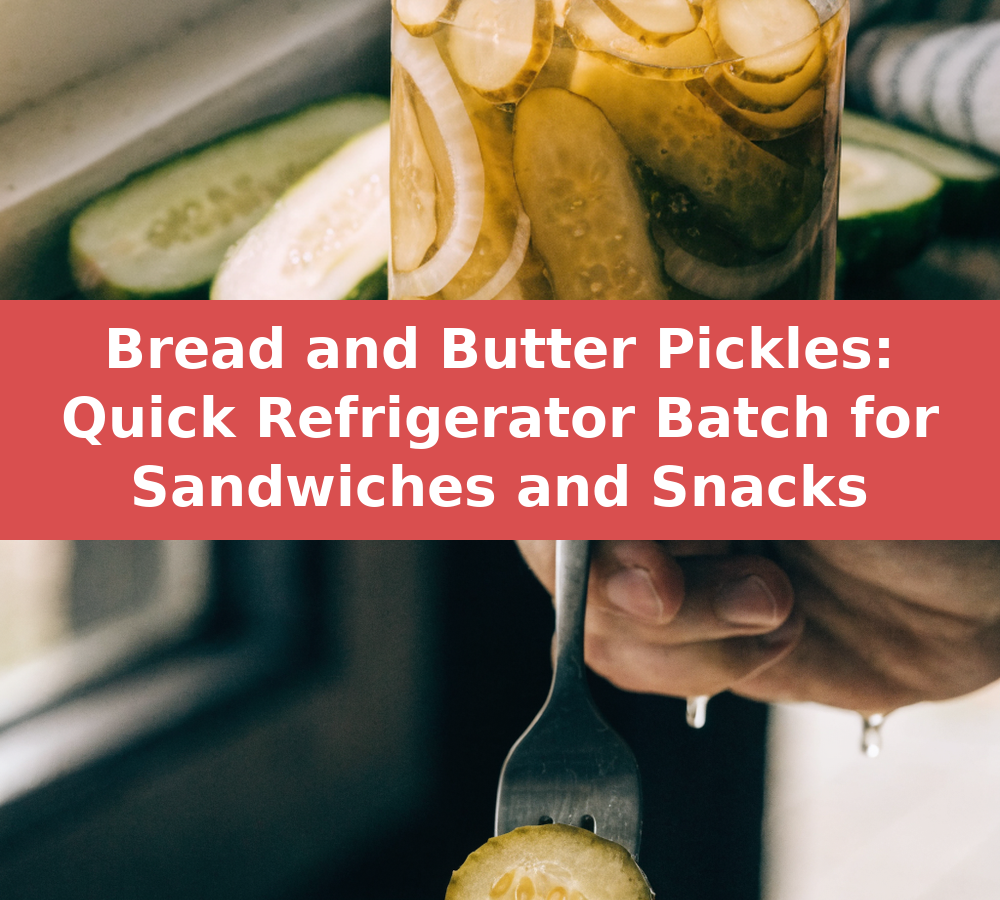
One late summer evening I pulled a jar from my mom’s fridge and found the kind of pickles that make sandwiches sing: crisp, tangy, and lightly sweet. These are my version of Mamaw’s refrigerator bread and butter pickles, and they start the same way every time — by salting and draining the cucumbers to keep their snap. Bread and butter pickles are sought after because home cooks want that exact balance of sweet-tart crunch; this recipe gives a dependable, fridge-ready version that I make when cukes are abundant.
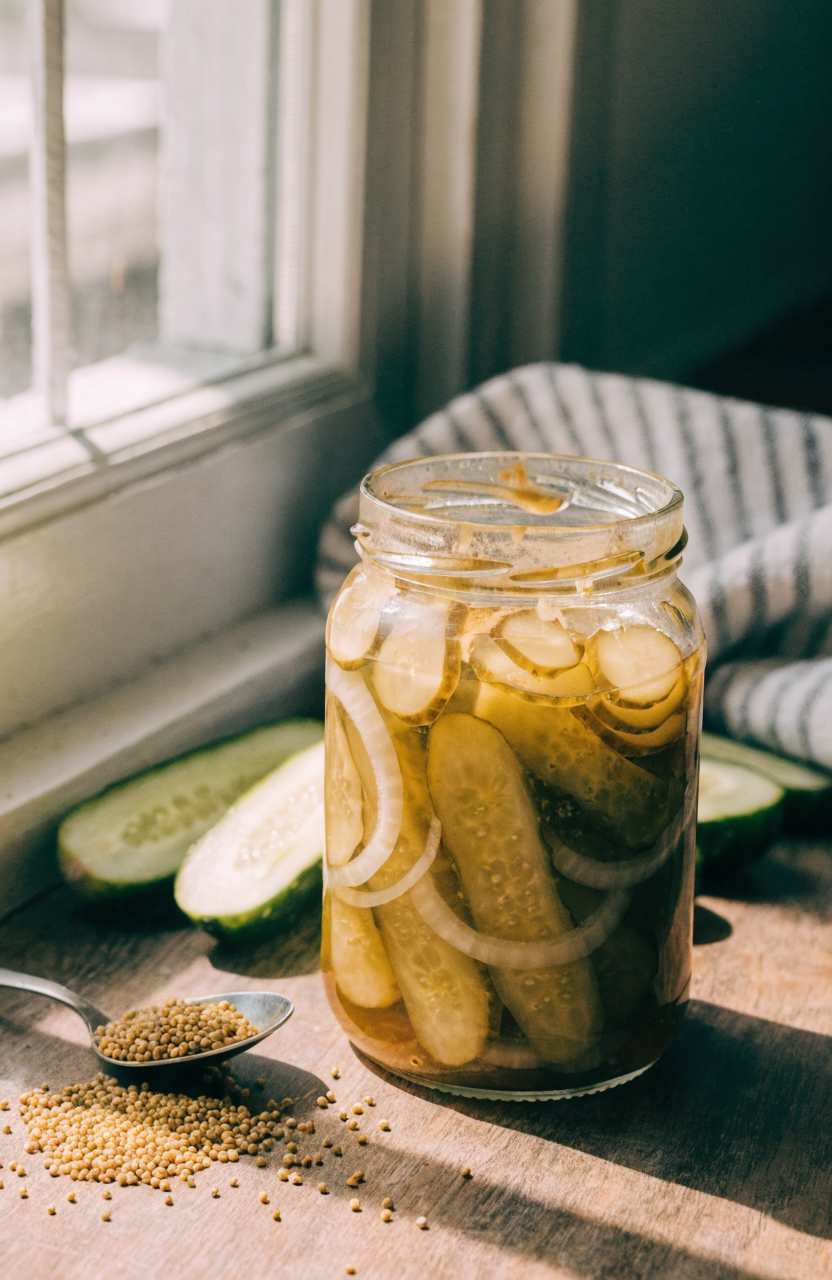
Why this bread and butter pickles works
The key technique that separates crunchy refrigerator-style bread and butter pickles from limp, watery ones is a short dry-salting step before the brine. I slice the cucumbers medium-thin, toss them with salt, and let them sit in a colander for 45–60 minutes while the salt pulls out excess water. That concentrates texture and flavor so the pickles stay crisp after sitting in the sweet-vinegar brine. The brine itself is a quick stovetop mix of vinegar, sugar, and aromatics heated just until the sugar dissolves — not boiled for long — which preserves bright flavor and prevents overcooking the cucumbers.
During testing I initially added the cucumbers to the hot brine right away and ended up with soft pickles; the adjustment was to cool the brine slightly and pour it over salted, drained cucumbers. I also learned to use thinly sliced onions and a modest amount of mustard seed to keep a classic bread-and-butter profile without overpowering the cukes. The final result is a crisp, slightly sweet-sour pickle that sets in the refrigerator and is ready to eat in about 24 hours, tasting even better after 48 hours.
Key takeaways
- Salting and draining cucumbers prevents soggy pickles and preserves crunch.
- A hot-but-not-searing brine (sugar dissolved, cooled slightly) gives bright flavor without cooking the cucumbers.
- Allow at least 24 hours for flavors to develop; best flavor after 48 hours.
Ingredients you’ll need and what to substitute
This recipe uses common pantry items: pickling or white vinegar, granulated sugar, pickling spice elements (mustard seed and celery seed here), and fresh cucumbers and onions. Use Kirby or other firm pickling cucumbers when possible; English cucumbers can work but often have thinner skins and more water — salt them a little longer. I prefer white or apple cider vinegar at 5% acidity; do not use seasoned vinegar or low-acid vinegar varieties. Light brown sugar can replace half the granulated sugar for a slightly deeper flavor, and honey may be used but expect a darker color and a different sweetness profile.
Mustard seed provides the traditional bread-and-butter note; if you don’t have it, whole coriander seed is a reasonable substitute but it changes the flavor. Use thin-sliced sweet onion (Vidalia or yellow onion) or red onion for a crisper bite and attractive color. If you want a milder pickle, reduce the sugar by 1/4 cup and taste the brine before pouring.
Equipment
You don’t need specialty gear for refrigerator pickles. I use a large bowl, a colander, a measuring cup, a medium saucepan, wooden spoon, and clean quart jars with lids. A mandoline makes even slices fast but a sharp knife works fine. If you plan to scale up, use wide-mouth jars for easier packing.
- Large mixing bowl and colander
- Medium saucepan (2–3 quart)
- Sharp chef’s knife or mandoline
- 3 or 4 clean quart jars with lids (or equivalent)
How to make bread and butter pickles
Prepare and salt the cucumbers
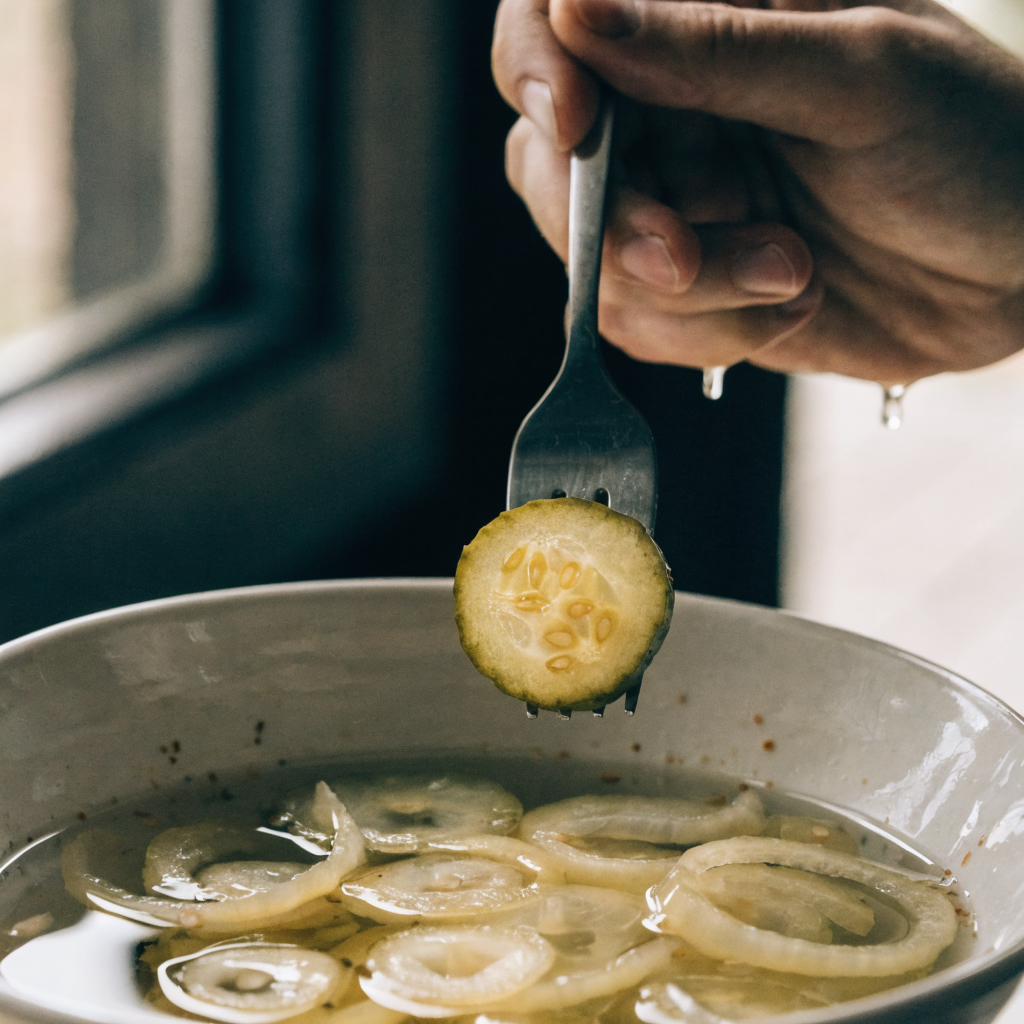
Start by washing and trimming ends from 3 pounds of firm cucumbers. Cut the cucumbers into 1/8- to 1/4-inch slices — I usually go on the thicker side of that range for crunch. Place slices in a colander set over a bowl, sprinkle evenly with 2 tablespoons kosher salt, and toss to coat. Let the cucumbers drain for 45–60 minutes; you’ll see clear liquid drip into the bowl. This step concentrates the cucumber texture and prevents the brine from diluting their snap.
Make the brine
While cucumbers drain, combine 2 cups white vinegar (5% acidity), 1 cup water, 2 cups granulated sugar, 1 tablespoon mustard seeds, 1 teaspoon celery seeds, 1 teaspoon turmeric (for color and a mild earthy note), 1 large thinly sliced sweet onion, and 1 teaspoon red pepper flakes (optional for a touch of heat) in a medium saucepan. Heat over medium just until the sugar dissolves and the mixture is steaming but not aggressively boiling — about 4–6 minutes. Taste carefully (use a spoon and cool a drop) and adjust sweetness or acidity by adding a tablespoon more sugar or a tablespoon more vinegar if you prefer. Remove from heat and let the brine cool for 10 minutes so it’s hot but won’t cook the cucumbers on contact.
Pack jars and pour brine
Rinse the salted cucumbers briefly under cold water and pat dry with a clean kitchen towel; this removes excess surface salt while keeping cucumbers firm. Pack the cucumber slices and the sliced onion into clean quart jars, leaving about 1/2 inch headspace. Add a scant 1/2 teaspoon extra mustard seed and 1/4 teaspoon celery seed to each jar if you like a slightly stronger spice presence. Pour the warm brine over the packed cucumbers, pressing down gently to remove air pockets. Seal jars with lids and let them cool to room temperature.
Resting and serving
Refrigerate jars for at least 24 hours before tasting. The pickles will be pleasantly crunchy at this point; flavor develops further over 48–72 hours. These are refrigerator pickles and must be stored in the fridge; they’re best within 4–6 weeks.
Things I learned the hard way
- Don’t skip salting: the first batch I made without salting tasted diluted and soft within two days. Salting and draining fixes that every time.
- Slice thickness matters: slices thinner than 1/8 inch become floppy; thicker than 1/4 inch are harder to pack and absorb less brine. Aim for 1/8–1/4 inch.
- Hot brine, not boiling: boiling the brine for too long cooked the onions and softened cucumbers. Dissolve the sugar and then remove from high heat.
- Rinse, don’t over-rinse: a quick cold rinse removes surface salt but removes enough for balanced flavor; don’t soak the cucumbers afterward.
- Use proper vinegar: low-acidity vinegars produce flat or unsafe pickles. Stick to 5% white or apple cider vinegar.
Variations to try
- Half-sour version: Reduce sugar by 1/2 cup and add 1 extra tablespoon of vinegar for a tangier result; increase salting time by 15 minutes to compensate.
- Spicy bread and butter pickles: Add 1–2 sliced jalapeños per quart jar and increase red pepper flakes to 1 teaspoon; expect slightly more softening after a week.
- Dill-sweet hybrid: Add 1–2 heads of fresh dill or 1 tablespoon dried dill to each jar and omit mustard seed for a dill-forward profile; flavor infuses similarly in 48 hours.
- Quick snack spears: Cut cucumbers into spears instead of rounds; pack tightly and use the same brine, but allow 48–72 hours for the brine to penetrate thicker pieces.
Storage, freezing, and reheating
Store these are refrigerated pickles only — they are not shelf-stable. Keep in the refrigerator for up to 4–6 weeks; flavor slowly mellows over time. Use clean utensils to remove pickles from the jar to avoid contamination. These pickles do not freeze well: freezing breaks cell walls and ruins the crisp texture. There is no reheating necessary; serve cold or at room temperature. If the brine becomes cloudy but the smell and flavor are normal, it’s fine; cloudy brine can result from spice sediment or slight fermentation and is common if jars are left open to air.
What to serve with bread and butter pickles
- Sliced on classic deli-style sandwiches or burgers
- Alongside potato salad or coleslaw at picnics
- Chopped into tuna or chicken salad for a bright crunch
- As part of a snack tray with sharp cheddar, cured turkey, and crackers
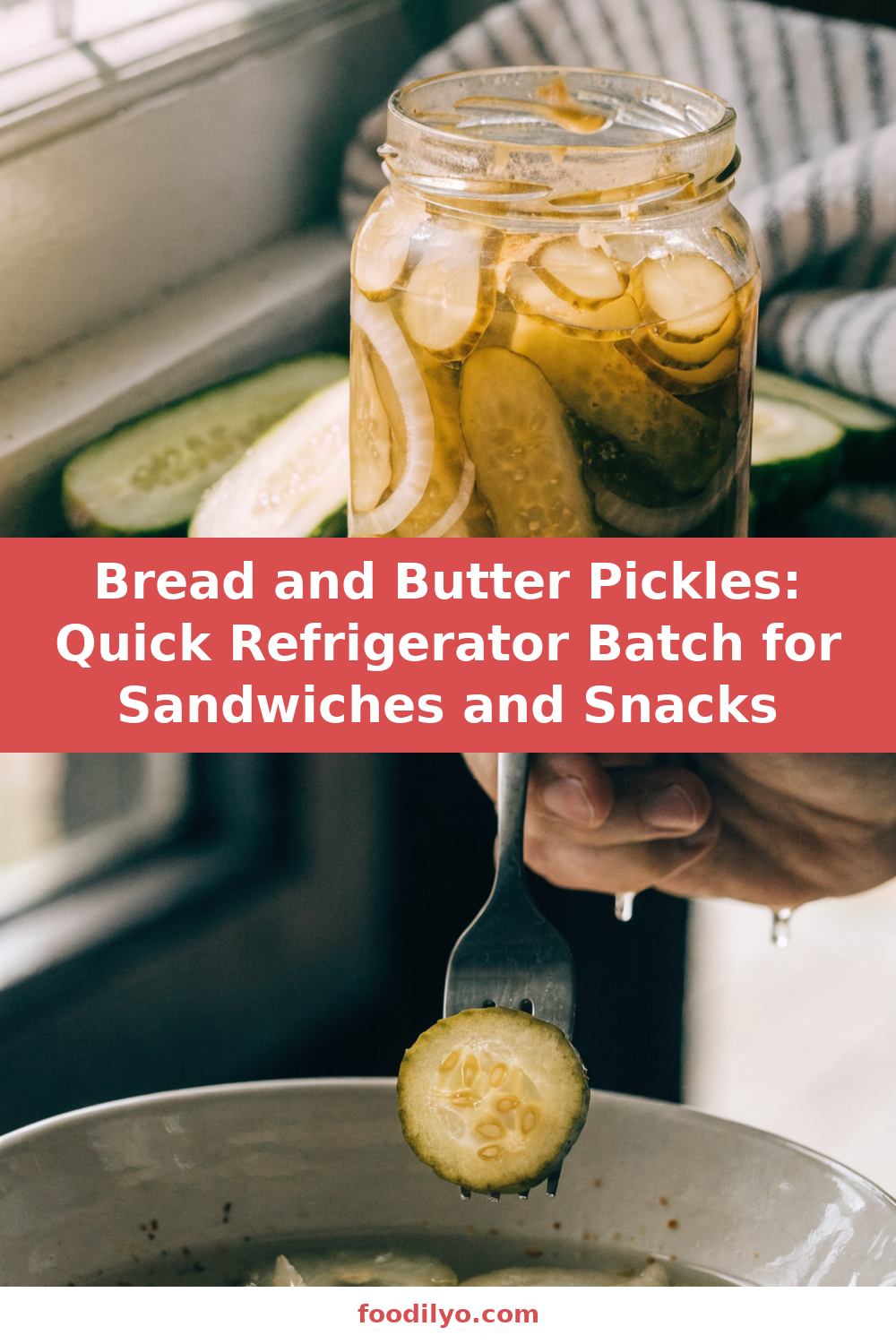
Mamaw’s Refrigerator Bread and Butter Pickles
Ingredients
Equipment
Method
- Wash cucumbers, trim ends, and slice into 1/8–1/4-inch rounds using a mandoline or sharp knife; place slices in a colander set over a bowl and sprinkle with 1 tablespoon kosher salt, tossing to coat evenly.
- Let cucumbers drain for 45–60 minutes while liquid collects in the bowl; this firms the cucumbers and prevents sogginess.
- Combine vinegar, water, granulated sugar, remaining 1 tablespoon kosher salt, mustard seeds, celery seeds, turmeric, thinly sliced onion, and red pepper flakes in a medium saucepan; heat over medium until sugar dissolves and the mixture is steaming (about 4–6 minutes), then remove from heat and let cool 10 minutes.
- Rinse the salted cucumbers briefly under cold running water and pat dry with a clean towel; pack the cucumber slices and onion into clean quart jars, leaving 1/2 inch headspace and adding a little extra mustard or celery seed to each jar if desired.
- Pour the warm (not boiling) brine over the packed cucumbers, pressing down gently to remove air pockets; seal jars with lids and let cool to room temperature, then refrigerate.
- Chill for at least 24 hours before tasting; best flavor after 48–72 hours. Store in the refrigerator up to 4–6 weeks.
Notes
Frequently asked questions
Can I use English cucumbers for bread and butter pickles? Yes, but English cucumbers are often thinner-skinned and watery; salt them a bit longer (60–75 minutes) to firm them up and pat very dry before packing.
How long do refrigerator pickles last? They stay best for 4–6 weeks in the refrigerator; flavor slowly softens after that but they are usually safe to eat longer if kept cold and clean.
Do I need to process these jars for shelf storage? No. This is a refrigerator-style pickle recipe and should be kept in the fridge; do not attempt water-bath canning with this specific brine without following an approved canning recipe for safety.
Can I reduce the sugar? Yes, you can reduce sugar by up to 1/2 cup for a tangier pickle; reduce gradually and taste the brine before filling jars to ensure balance.
Why did my pickles become cloudy? Cloudiness can come from sediment from spices, yeast activity, or dissolved minerals; it’s often harmless in fridge pickles if smell and taste are normal. If you detect off odors, discard.
Closing
This bread and butter pickles recipe delivers crisp, slightly sweet pickles that fit sandwiches, salads, and snack trays — and it fixes the sogginess issue by salting and draining before brining. I keep a jar in my fridge for weeks, and each time the cukes retain a satisfying snap; it’s a small, reliable recipe that brightens everyday meals.